
Carrier Failover Setup Guide for AI Calling
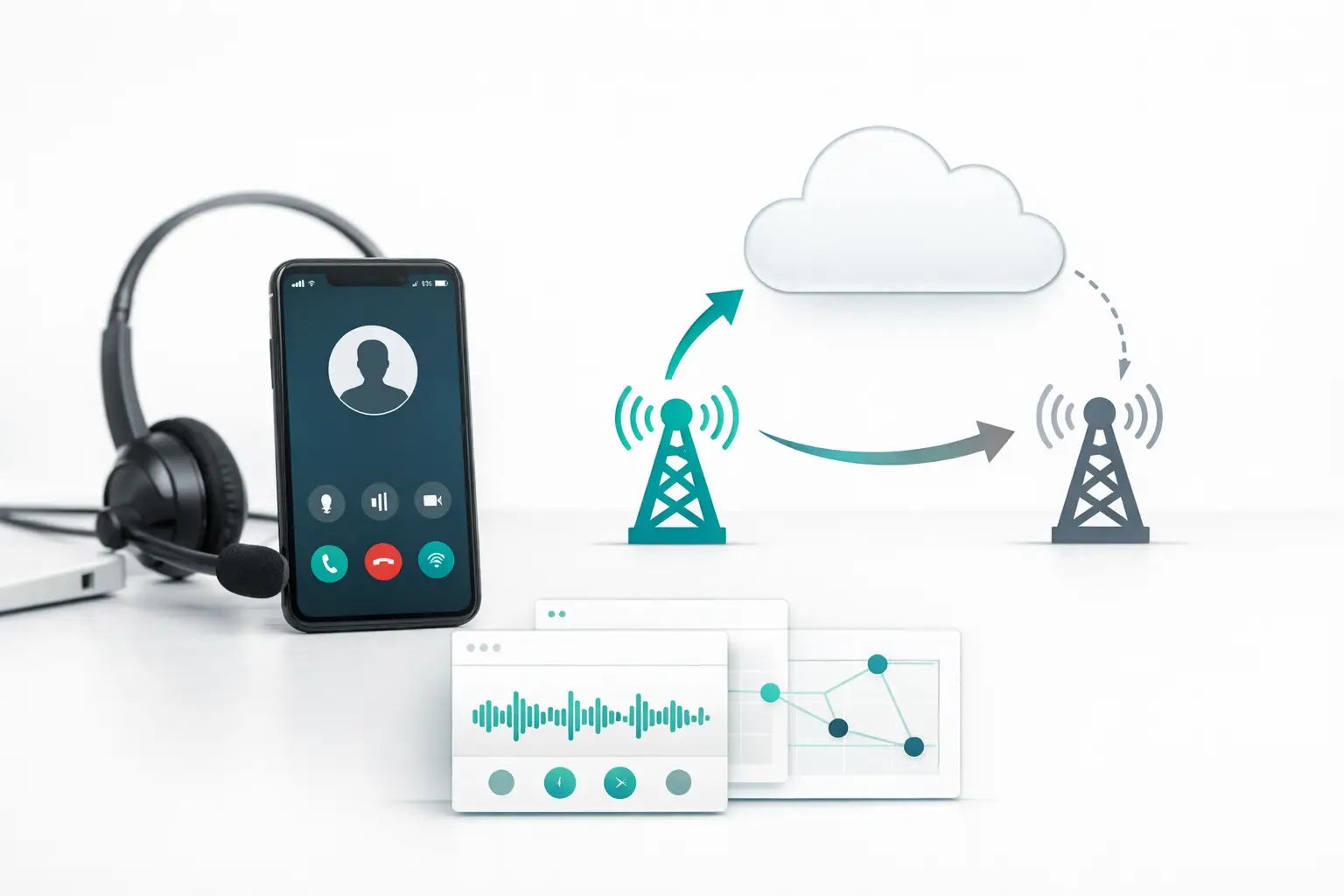
If your AI voice stack depends on a single carrier, you do not have a production system. You have a point of failure. A proper carrier failover setup guide starts there - not with SIP jargon, but with the operational reality that one routing issue, API outage, or number health event can stop booked appointments, inbound support, and lead follow-up in minutes.
For teams running revenue-generating call flows, failover is not a nice-to-have. It is part of basic call center infrastructure. The hard part is that most setups look fine until traffic spikes, one carrier starts rejecting calls, or inbound numbers stop terminating cleanly across a region. Then you find out whether your backup path is real or just something that existed on a diagram.
What carrier failover actually needs to cover
Most teams think of carrier failover as a simple primary-secondary switch. In practice, that is too narrow. You need to account for outbound origination, inbound termination, number-level routing, regional performance, webhook dependencies, and reporting continuity.
If your primary carrier fails for outbound calls, your AI agent still needs a working path to place calls with the right caller ID, rate limits, and compliance controls intact. If your inbound carrier path degrades, calls still need to hit the correct IVR, AI receptionist, or human handoff workflow. If reporting breaks during the switchover, operations loses visibility at the exact moment it matters most.
That is why failover should be designed at the workflow layer, not only the telecom layer. The carrier path is one dependency among several.
Carrier failover setup guide: start with failure modes
Before you configure anything, define what failure means in your environment. Different teams fail for different reasons.
One operation may care most about hard downtime - calls do not connect at all. Another may care about quality degradation - post-dial delay climbs, answer rates fall, or inbound calls start landing with one-way audio. A high-volume outbound team may hit throughput caps or sudden filtering issues before it sees a full outage. An inbound support line may be more exposed to number-level routing errors than carrier-wide incidents.
This matters because your trigger logic should match the risk. If you only fail over after a complete outage, you will absorb avoidable losses during partial degradation. If you fail over too aggressively, you can create route flapping, duplicate records, and inconsistent reporting.
A practical rule is to define thresholds in three buckets: availability, quality, and latency. Availability covers completion failures and SIP error patterns. Quality covers answer stability, audio path health, and abnormal disconnects. Latency covers post-dial delay, call setup time, and webhook timing between your AI provider and telephony layer.
Design the routing model before you buy more redundancy
A second carrier does not solve much if your routing logic is weak. The first architecture decision is whether failover happens globally, by campaign, by number pool, or by region.
Global failover is simple, but blunt. It can push all traffic to a backup carrier even when only one geography or number range is affected. Campaign-level failover is usually a better fit for outbound teams because it lets you protect high-priority programs first. Number-level failover is critical for inbound operations where individual DIDs support specific local markets, service lines, or routing trees.
Regional logic becomes important when carrier performance varies by state or rate center. A backup route that works well in Texas may perform differently in Florida or California. If you are running localized outreach or service dispatch, that difference is not theoretical. It shows up in connection rates and customer experience.
The best setups let you route by policy, not by manual intervention. That means defining which traffic can shift automatically, which traffic needs an approval step, and which traffic should stay pinned unless there is a severe incident.
Separate inbound and outbound failover policies
Inbound and outbound traffic should not share the same assumptions. Outbound calling tolerates some queued retries and dynamic route changes. Inbound does not. When someone calls a sales line or service number, there is no second chance if the call does not land correctly.
For inbound, prioritize DID-level redundancy, tested rerouting paths, and fallback destinations that preserve context. If your AI receptionist is unavailable, can the call move to a live queue, voicemail capture, or alternate flow without losing caller data? If the carrier route fails, can the number re-terminate without requiring a port or manual ticket?
For outbound, prioritize route health scoring, automated carrier selection, and campaign-aware limits. If one carrier starts underperforming, your dialer should reduce or pause traffic there before a full cutover. A graded response is often better than an all-or-nothing switch.
Build around number health, not just carrier status
A common mistake is monitoring carrier uptime while ignoring number health. Carriers can be fully operational while certain numbers experience blocking, registration drift, CNAM inconsistency, or routing anomalies.
That matters even more for AI voice teams that rely on caller reputation and local presence. If one number pool degrades, you do not want your entire campaign to fail over. You want the platform to isolate the issue, rotate healthy inventory, and preserve the rest of the traffic plan.
This is where centralized orchestration matters. Teams using separate tools for numbers, carriers, AI agents, and CRM updates often cannot tell whether the failure came from the route, the number, the dialer, or the workflow. They just see lower connection rates and start guessing.
Test the full path, not the carrier in isolation
A failover path is only real if it has been tested under load. Sending one successful test call to a backup carrier proves almost nothing.
You need to test the full sequence: call initiation, carrier handoff, AI session start, transcript or event capture, CRM writeback, disposition logic, and reporting. For inbound, test number presentation, IVR logic, AI transfer behavior, voicemail fallback, and human handoff. For outbound, test caller ID continuity, concurrency handling, retry policies, and campaign attribution.
Run these tests during normal traffic windows, not only in a sandbox. Also test partial degradation scenarios. A carrier can stay technically up while introducing enough delay or error volume to hurt campaign economics. Your monitoring should catch that before your revenue team does.
Alerting should help operators act quickly
Alerts that say carrier issue detected are not useful. Operators need enough context to decide whether to shift traffic, pause campaigns, rotate numbers, or escalate to a vendor.
That means alerts should show which carrier is affected, whether the issue is inbound or outbound, which campaigns or numbers are impacted, how long the pattern has persisted, and whether failover has already executed. If you run multiple AI providers or handoff destinations, include those dependencies too. Sometimes the symptom looks like a carrier issue but the failure is upstream in the agent session or downstream in routing logic.
Good alerting also respects business priority. Your highest-value appointment-setting campaign should not be treated the same as a low-volume nurture flow. Incident handling should mirror commercial impact.
Reporting continuity is part of failover design
When traffic shifts between carriers, reporting often breaks. Call records fragment. Dispositions land in different systems. Answer rates become hard to compare. Teams lose trust in the data just when they need to explain what happened.
Your carrier failover setup guide should include a reporting plan that normalizes call activity regardless of route. You should be able to answer basic operational questions without stitching together logs from multiple vendors. Which calls were attempted? Which route carried them? What changed after failover? Did booking rates recover? Did handle time change on inbound traffic?
If your stack cannot answer those questions centrally, failover will remain reactive and political. One team blames the carrier, another blames the AI provider, and no one has clean evidence.
When to automate failover and when not to
Automatic failover is powerful, but it is not always the right move. For inbound service lines, automation is usually worth it because the cost of downtime is immediate. For outbound campaigns, the answer depends on compliance configuration, number strategy, and customer experience goals.
If your backup route uses different number inventory, different attestation behavior, or a different local presence model, a blind cutover can change performance in ways your sales team notices fast. In some cases, it is better to slow or pause traffic while operations verifies that the backup path is performing normally.
The right answer is often hybrid automation: automatic detection, policy-based throttling, and approved cutover rules for specific traffic classes.
A practical setup pattern for growing teams
For most serious operators, the cleanest model is two active carrier relationships, centralized routing control, number health monitoring, and workflow-level observability across AI, telephony, and CRM events. That gives you room to distribute traffic intentionally instead of waiting for a failure to validate your backup.
If you are still relying on direct point-to-point integrations between your AI provider, carrier, and CRM, failover will remain brittle because every route change creates side effects elsewhere in the stack. This is where an orchestration layer such as VoiceUni becomes operationally useful - not as another dashboard, but as the control plane that keeps routing, campaigns, reporting, and handoffs coordinated when one component fails.
The goal is not zero incidents. No carrier environment works that way. The goal is faster isolation, cleaner traffic shifts, and fewer missed conversations when something breaks.
A failover plan is credible when your team can explain exactly what happens in the first 60 seconds of a carrier issue, the next 15 minutes, and the next business hour. If that answer is still vendor-dependent or manual, your next outage will expose it.
More from the VoiceUni Blog.

What Drives Solar Appointment Booking Results
A solar operator booking 150-plus appointments in a single week is not winning because it found a magic script. It is winning because its lead response, qualification, routing, follow-up, and reporting are operating as one system. Solar appointment booking results are usually decided in the handoffs between those st...

AI Phone Number Reputation Guide for Call Teams
A campaign can have clean data, a capable AI voice agent, and a well-built follow-up sequence, yet still underperform for one basic reason: the originating phone number has lost trust. This AI phone number reputation guide is for operators who need to protect answer rates before poor number health turns into a pipel...

AI Contact Center Software Review for Operators
An AI contact center software review should start where most evaluations fail: the live workflow, not the demo. A voice agent that can hold a convincing conversation is only one component. Revenue operations still need the right lead data, approved contact rules, routing logic, carrier capacity, CRM updates, human e...
Get new posts by email.
One email a month, no spam, unsubscribe anytime.