
What Is AI Voice Orchestration?
A voice agent can sound impressive in a demo and still fail in production. The usual breakdown is not the model. It is the operating layer around it. That is where the question of what is AI voice orchestration starts to matter.
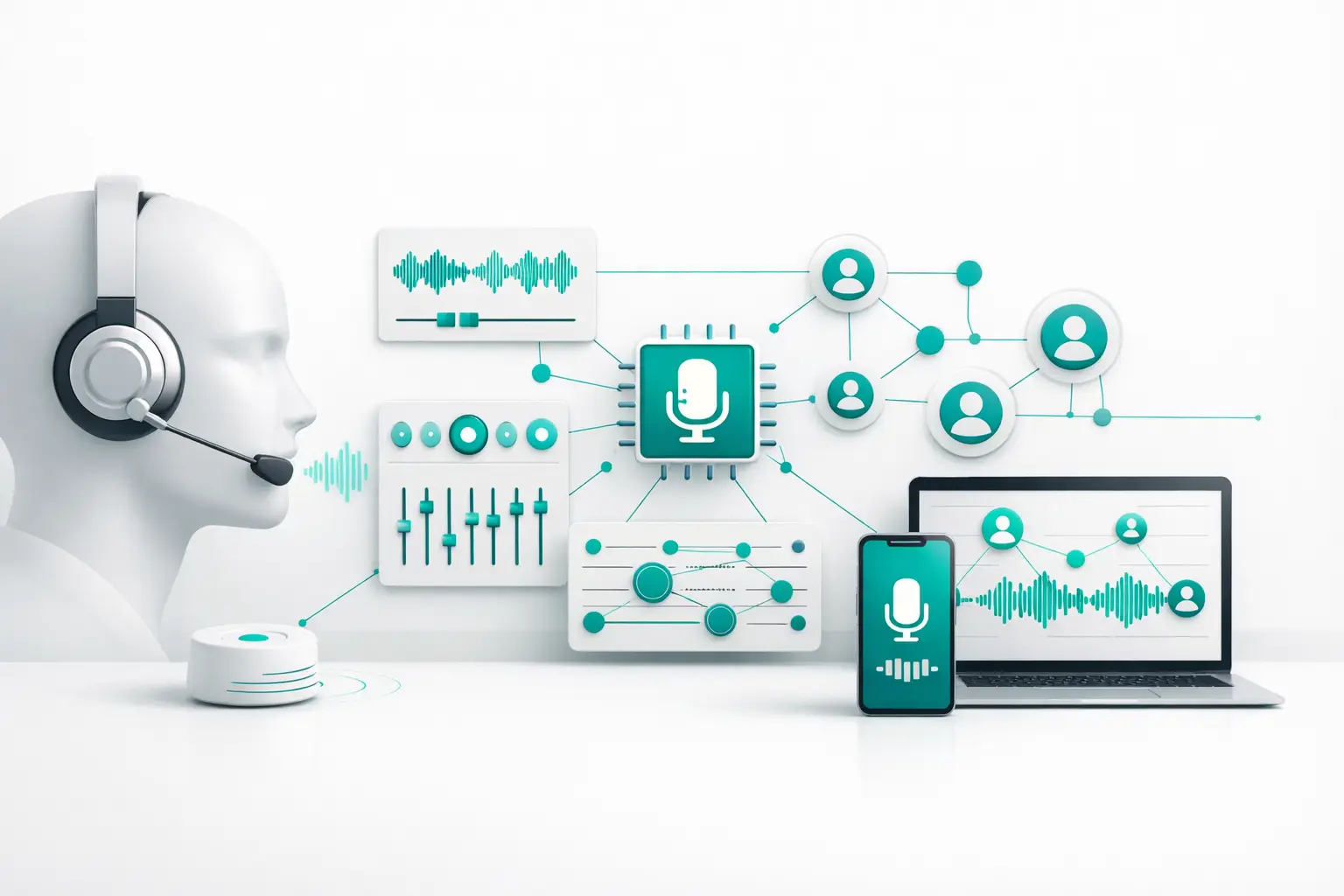
Most teams already understand the agent side. They have a provider for speech and conversation logic. They may also have Twilio, HubSpot, Salesforce, Apollo, or another piece of the stack in place. What they often do not have is a reliable way to make all of those systems work together across live calling workflows, fallback paths, routing rules, reporting, and handoffs. AI voice orchestration is the infrastructure that coordinates those moving parts so an AI voice operation can actually run like a contact center instead of a disconnected experiment.
What is AI voice orchestration in practical terms?
AI voice orchestration is the layer that manages how an AI voice agent interacts with telephony, business systems, workflows, and other channels before, during, and after a conversation.
That sounds abstract until you look at the call path. A prospect answers an outbound call. The system has to pick the right number to call from, connect through an available carrier, launch the right agent, pull context from the CRM, follow a campaign rule, log outcomes, trigger a follow-up message, and route to a human if the conversation reaches a handoff point. If one part fails, the operation degrades fast.
Without orchestration, teams end up wiring these functions together one integration at a time. That can work for a pilot. It usually breaks at scale. Carrier issues create dropped calls. CRM data arrives late or not at all. Reporting gets split across tools. Human transfers become manual. Compliance reviews turn into spreadsheet work. The AI agent may still be strong, but the system around it is brittle.
Orchestration turns that stack into an operating framework. It does not replace every tool. It coordinates them.
The difference between an AI voice agent and orchestration
This distinction matters because buyers often assume the voice provider is the whole product.
An AI voice agent handles the conversation itself. It listens, interprets, responds, and follows prompts or business logic. That is the conversational engine.
AI voice orchestration handles the operational system around that engine. It decides which agent should answer which call, what data the agent should receive, how call attempts should be sequenced, what happens if a carrier fails, where call outcomes should be written back, how reporting should be normalized, and when a human should take over.
A simple way to think about it is this: the agent is the speaker, but orchestration is the call center infrastructure.
That is why teams using strong providers like Vapi or Retell still run into production gaps. Those platforms may power the conversation well, but businesses running real inbound and outbound operations still need routing, carrier management, CRM sync, multi-step campaign logic, omnichannel follow-up, and performance controls.
Why AI voice orchestration matters once volume increases
At low volume, almost any setup can appear stable. A few campaigns, one carrier, one CRM, and limited routing complexity are manageable. The problems show up when operations expand.
An insurance agency may need inbound call handling, quote follow-up, missed-call text flows, and agent escalation during business hours. A solar operator may need high-volume outbound dialing tied to lead source quality, appointment outcomes, and number reputation. A real estate team may want new lead contact attempts across voice, SMS, and email with clear rules for when a live rep takes over. None of those are just model problems.
They are orchestration problems.
As soon as call operations involve multiple systems, performance depends on coordination. The business needs consistency across campaigns, channels, and teams. It needs one place to manage retries, disposition logic, reporting, and routing behavior. It needs failover plans when carriers underperform. It needs visibility into whether the AI is reaching the right people, handling them correctly, and creating the intended downstream action.
That is the operational value of orchestration. It reduces the gap between a working demo and a working revenue system.
What AI voice orchestration typically includes
The exact architecture varies, but mature orchestration usually covers a few core functions.
The first is telephony control. That includes carrier connectivity, number management, call routing, failover, and dialing behavior. If you are running production voice, these details directly affect answer rates, call quality, and uptime.
The second is workflow coordination. Calls do not happen in isolation. They belong to campaigns, queues, support paths, qualification logic, and follow-up sequences. Orchestration decides what should happen next based on the call result, the contact record, or a business rule.
The third is system integration. The voice layer needs clean access to CRMs, lead sources, calendars, email tools, and reporting systems. The goal is not just data transfer. It is timing and reliability. A contact record that updates three hours late is operationally wrong even if the integration technically exists.
The fourth is human handoff. AI voice works best when escalation paths are designed upfront. If a lead is qualified, if a customer requests a person, or if confidence drops, the transfer should be immediate and trackable. Handoff is not an edge case. It is part of the operating model.
The fifth is observability. Teams need reporting that connects channel activity, call outcomes, campaign performance, and operational health. If reporting is fragmented between the voice provider, carrier, CRM, and spreadsheet exports, management decisions get delayed or distorted.
When those capabilities are coordinated under one layer, the AI agent becomes much easier to deploy and much easier to trust.
What is AI voice orchestration across channels?
Voice rarely stands alone for long. A missed inbound call can trigger SMS. A qualified outbound conversation can trigger email confirmation. A web form lead may need voice follow-up if they do not respond to text. That is why what is AI voice orchestration cannot be limited to the phone call itself.
In practice, orchestration often extends across voice, SMS, email, webchat, WhatsApp, and other messaging channels. The value is continuity. The business can manage one customer journey instead of separate channel automations competing with each other.
This is especially relevant for revenue teams. If your contact strategy spans multiple touchpoints, you need one control layer deciding message order, channel priority, timing, ownership, and outcome logging. Otherwise, contacts get duplicate outreach, reps lose context, and reporting turns into channel silos.
For operators, omnichannel orchestration is less about adding more channels and more about reducing fragmentation.
Where teams get it wrong
The most common mistake is assuming integration equals orchestration. It does not.
A direct connection between a voice provider and a CRM may pass data. That does not mean it handles routing logic, retries, fallback behavior, number health, campaign management, or cross-channel sequencing. Those are operating requirements, not simple integration tasks.
The second mistake is overbuilding internally. Technical teams can stitch together carriers, agent providers, webhook logic, CRM actions, and dashboards. The issue is maintenance. Every workflow change creates more custom logic. Every vendor update introduces new failure points. What starts as flexibility often becomes dependency on internal engineering for routine contact center operations.
The third mistake is treating compliance and escalation as afterthoughts. Production AI voice needs auditability, clear workflows, and explicit control over how calls are handled. That discipline should exist from day one, not after the first campaign issue.
How to evaluate an AI voice orchestration layer
If you are assessing platforms, the right questions are operational.
Ask whether it works with your existing AI provider or forces a full replacement. Ask how it handles carrier failover and number management. Ask whether inbound and outbound workflows run in the same system. Ask how campaign logic is configured, how CRM writes are managed, and how human handoff works in real time.
Also ask what happens when something breaks. Production infrastructure should not depend on manual fixes every time a carrier degrades, an integration stalls, or a routing rule changes.
A strong orchestration layer should let you keep the tools you already trust while removing the duct-tape work between them. That is the real value of a BYO-everything model. You do not need to rebuild your stack just to make it operational.
For serious operators, the standard is simple. Can this system support live volume, business-specific workflows, and clear reporting without creating a developer maintenance problem?
The real point of orchestration
AI voice orchestration is not a nicer way to describe integrations. It is the control plane for running AI conversations as a business function.
That matters because production voice is never just about what the agent says. It is about whether the call gets connected correctly, whether the right context is available at the right moment, whether the next action happens automatically, and whether the team can see what is working. VoiceUni is built around that exact layer because this is where AI calling either becomes operational or stays stuck in pilot mode.
If you are already using AI voice and feeling friction between providers, carriers, CRMs, and workflows, that friction is usually the answer. The agent is only part of the system. The operation around it is what determines whether it performs.
More from the VoiceUni Blog.
What is omnichannel AI contact center infrastructure?
How operators run voice, SMS, email, and chat on one platform — without wiring every integration by hand.

Best Outbound Dialing Software for AI Teams
If your outbound stack still depends on a dialer in one tab, lead data in another, and CRM updates that may or may not happen, the problem is not call volume. It is orchestration. The best outbound dialing software is not just the tool that places calls fastest. It is the system that keeps campaigns, data, complianc...

Can AI Agents Handle Call Transfers Well?
A lead calls in, gets through qualification, asks one billing question, and the whole interaction falls apart at the handoff. That is where teams usually stop asking whether the bot sounded human enough and start asking the real operational question: can AI agents handle call transfers? The short answer is yes, but ...
Get new posts by email.
One email a month, no spam, unsubscribe anytime.