
When Should Businesses Use Predictive Dialing?
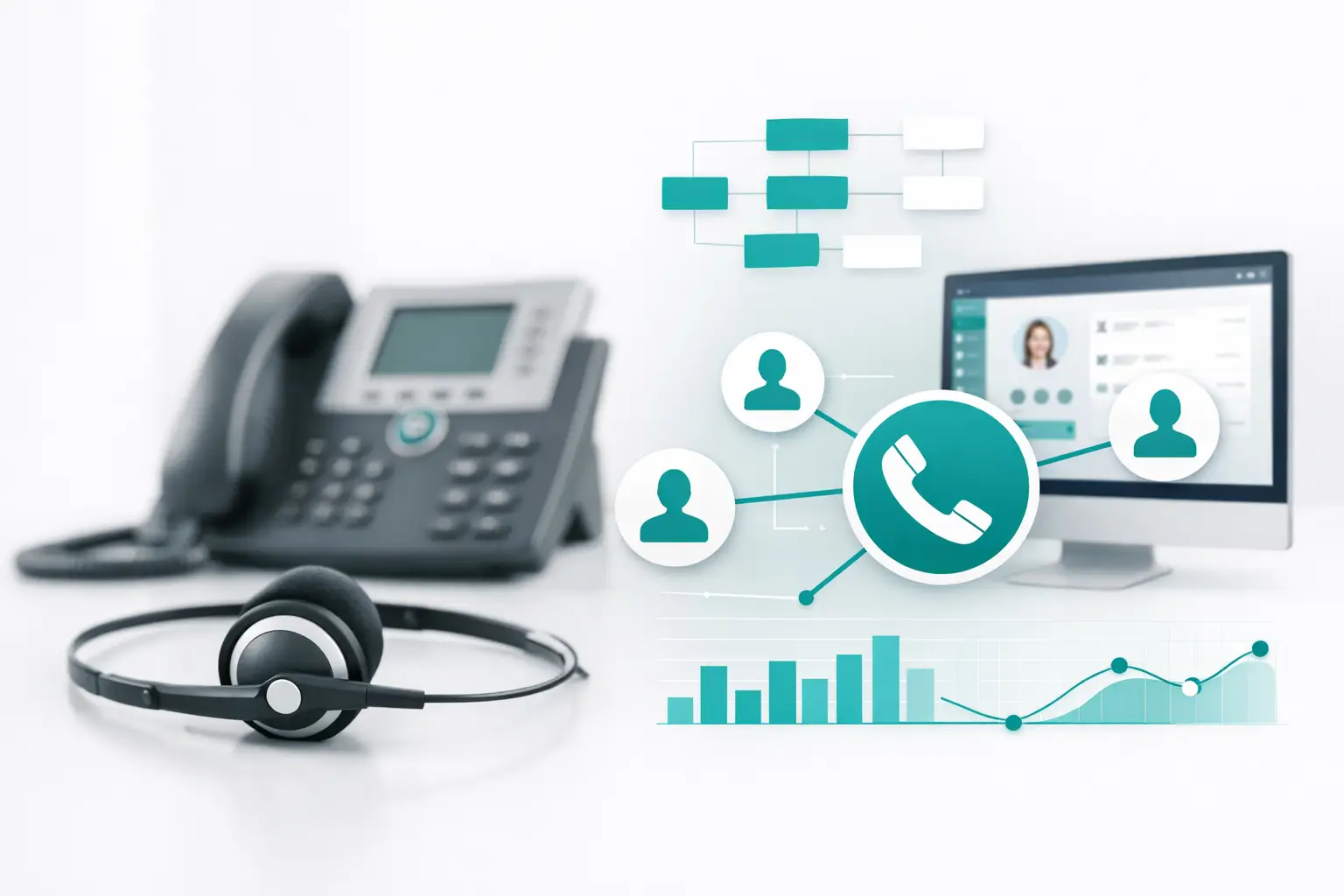
A ten-agent team with a strong lead list can still waste half the day waiting for rings, voicemails, and bad numbers. That is usually the moment leaders start asking when should businesses use predictive dialing. The short answer is this: use it when agent idle time is the problem, contact volume is high, and your operation can support speed without losing control.
That answer matters because predictive dialing is not just a faster dialer. It is a throughput system. It changes pacing, staffing, routing, and reporting. In the right environment, it lifts agent utilization and contact rates. In the wrong one, it creates operational noise, uneven handoffs, and a poor experience for both teams and prospects.
What predictive dialing is actually solving
Predictive dialing is built for one core issue: too much dead time between live conversations. Instead of having each rep wait through every unanswered call, the system places multiple calls based on expected answer rates and connects live pickups to available agents.
That sounds simple, but the operational implication is bigger. The dialer is making pacing decisions in real time based on list quality, pickup rates, agent availability, and call outcomes. If your team has enough volume and enough consistency, that automation produces a measurable gain. If those inputs are unstable, predictive logic can become more trouble than help.
For serious outbound teams, the question is less about whether predictive dialing works and more about whether the workflow around it is mature enough to support it.
When should businesses use predictive dialing
Businesses should use predictive dialing when they run high-volume outbound campaigns with repeatable call handling, enough agent capacity to absorb live answers, and clear compliance controls built into the workflow.
The best fit is usually a team calling through a large, permissioned lead pool where speed matters and each conversation follows a defined path. Think appointment-setting teams in solar, insurance follow-up desks, real estate ISA teams, or agencies running outreach on behalf of clients. In those environments, the unit economics improve when agents spend more time talking and less time waiting.
Predictive dialing also works well when the first objective is narrow and measurable. Booking a consultation, qualifying a lead, confirming interest, or routing a contact to the right closer are good examples. These are not open-ended relationship calls. They are fast, structured interactions where consistency beats improvisation.
It is also a strong fit when your operation already has clean status mapping. If you know the difference between no answer, busy, bad number, voicemail, qualified, disqualified, callback requested, and transferred, the dialer can optimize around real outcomes. If every result gets dumped into a generic disposition field, you will move faster without learning much.
High lead volume and short call objectives
Predictive dialing performs best when there is enough lead density to keep the model accurate. A small list with highly variable answer patterns is not ideal. A larger list with similar call intent and predictable pickup behavior is.
This is why many revenue teams use predictive dialing at the top or middle of the funnel, not at the bottom. The closer the call gets to a high-value, nuanced conversation, the more important timing, context, and account history become. Early-stage qualification is often where predictive systems deliver the cleanest return.
Stable staffing and real-time routing
If agents are logging in and out unpredictably, or if transfers fail regularly, predictive dialing will expose those weaknesses fast. The system assumes there is a reliable path from live answer to available rep or AI voice agent. When that path breaks, abandoned connections and poor handoffs follow.
That is why dialing mode should never be treated as a standalone feature. It sits inside a broader operating layer that includes carrier performance, queue logic, CRM sync, call routing, reporting, and fallback rules. Teams that duct-tape these pieces together often blame the dialer for problems that actually start in infrastructure.
When predictive dialing is the wrong choice
Some teams move to predictive dialing too early. They see the promise of more conversations per hour and skip the readiness check.
If your campaign depends on highly personalized outreach, progressive dialing is usually the better fit. The rep or AI agent gets time to review context before the call. That matters for account-based outreach, renewal conversations, complex financial products, or any workflow where the opening seconds depend on accurate customer history.
If your list quality is poor, predictive dialing can magnify the problem. More dials against bad data is not efficiency. It is just waste at higher speed. Before changing dial mode, fix number hygiene, suppress stale records, and confirm that dispositions are feeding back into the system correctly.
It is also a bad fit for small teams with low simultaneous capacity. A two- or three-rep operation may get more value from progressive pacing and cleaner follow-up sequences across voice, SMS, and email than from an aggressive predictive engine.
Predictive vs progressive dialing in practice
Most teams do not need a philosophical debate here. They need an operational rule.
Use predictive dialing when the campaign is volume-heavy, talk tracks are standardized, and your goal is maximizing live connect efficiency. Use progressive dialing when each call needs prep, timing control, or rep context before the line connects.
In many businesses, both modes belong in the same stack. A lead generation campaign may start with predictive dialing to identify interest quickly, then move qualified contacts into progressive workflows for scheduled follow-up. That is a better design than forcing one dial mode across every stage of the funnel.
The same logic applies to AI voice operations. An AI agent handling first-touch qualification can work well in a predictive environment if the routing, escalation, and dispositioning are tightly controlled. But if the workflow requires nuanced branching, human review, or exception handling, a slower mode often produces better outcomes.
Operational signs you are ready
You are probably ready for predictive dialing if your team already knows its answer rates by list segment, has reliable lead source tagging, and can measure agent occupancy alongside conversion outcomes. Those are the signs of a controlled outbound system, not just a busy one.
You should also be able to answer a few practical questions without guessing. How many live answers can your team absorb in a five-minute window? What happens when all agents are busy? Can your CRM update in real time after each call? Can you separate carrier issues from list issues from scripting issues in reporting?
If those answers are unclear, predictive dialing may still be possible, but it should be introduced carefully. Start with one campaign, not the whole floor. Watch occupancy, live connect rate, transfer success, and downstream conversion together. More conversations only matter if the operation can convert and track them.
Infrastructure matters more than the dial mode
This is where many teams get stuck. They pick a dialer based on headline features, then discover the real failure points live somewhere else. The CRM does not update cleanly. Carrier performance varies by number pool. AI agents cannot hand off properly. Reporting is split across three systems. Campaign logic breaks the moment a lead replies on another channel.
Predictive dialing only works well when the surrounding stack is coordinated. That means dialing logic, call routing, compliance controls, CRM sync, lead sequencing, and reporting need to operate as one system. For teams already running AI voice with tools like Vapi or Retell, this becomes even more important because call flow, escalation logic, and channel orchestration have to stay aligned under load.
That is why mature operators treat predictive dialing as one component of outbound infrastructure, not the product itself. VoiceUni fits this model by sitting between the AI layer, telephony, CRM, lead data, and routing logic so teams can run predictive and progressive workflows without rebuilding the stack around each campaign.
The real decision is about workflow maturity
When should businesses use predictive dialing? When the business has earned the right to go faster.
That means volume is real, call objectives are structured, staffing is stable, data is clean, and the routing layer can handle live demand without breaking. If those conditions are in place, predictive dialing can materially increase throughput. If they are not, a slower dialing mode often produces better performance because it protects context and control.
The smartest teams do not ask which dialer is best in general. They ask which dialer fits this campaign, this lead source, this staffing model, and this conversion path. That is the question that keeps outbound efficient without turning the operation into a patchwork of disconnected tools.
If your team is considering predictive dialing, do not start with the dial rate. Start with the workflow you need to support once someone actually answers.
More from the VoiceUni Blog.

Best Outbound Dialing Software for AI Teams
If your outbound stack still depends on a dialer in one tab, lead data in another, and CRM updates that may or may not happen, the problem is not call volume. It is orchestration. The best outbound dialing software is not just the tool that places calls fastest. It is the system that keeps campaigns, data, complianc...
What Is AI Voice Orchestration?
A voice agent can sound impressive in a demo and still fail in production. The usual breakdown is not the model. It is the operating layer around it. That is where the question of what is AI voice orchestration starts to matter. Most teams already understand the agent side. They have a provider for speech and conver...
How AI voice agents qualify leads before a human call
A practical guide to using AI voice agents for lead qualification, routing, and cleaner sales handoffs.
Get new posts by email.
One email a month, no spam, unsubscribe anytime.