
How to Manage Multi Channel Outreach at Scale
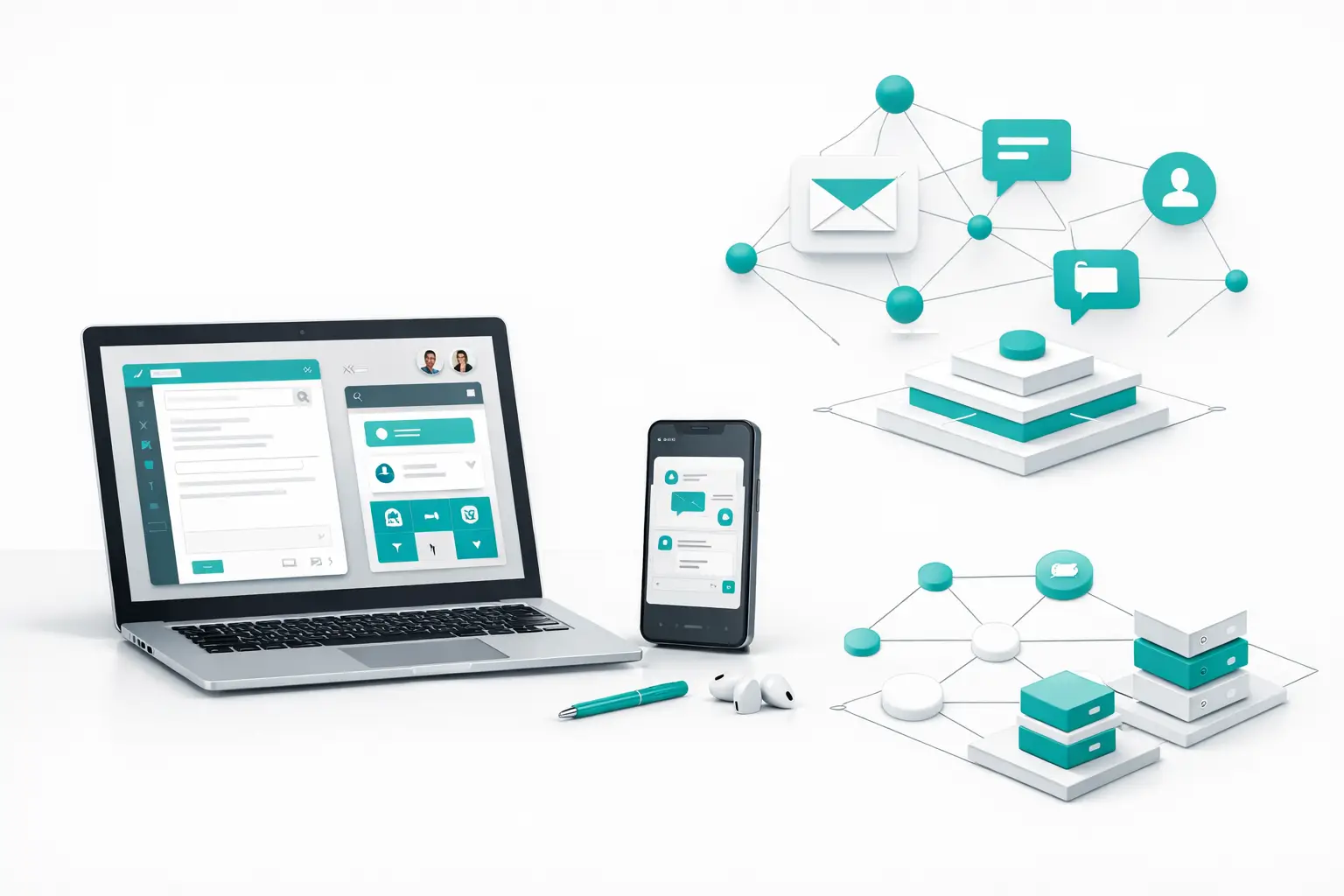
A prospect replies to a text after ignoring two emails. A call connects, but the rep cannot see the WhatsApp conversation from earlier that morning. Meanwhile, an AI agent qualifies the same lead from an old campaign list. This is not a messaging problem. It is an orchestration problem.
Knowing how to manage multi channel outreach means building one operational system for every approved touchpoint. Voice, SMS, email, webchat, WhatsApp, Telegram, and social DMs should work from the same lead record, follow the same business rules, and produce a single view of what happened next. Without that layer, more channels usually create more duplicates, more handoff failures, and less confidence in reporting.
How to manage multi channel outreach without creating chaos
The goal is not to use every available channel for every lead. The goal is to select the right next action based on lead status, prior engagement, consent and communication preferences, time zone, and the outcome of the last interaction.
Start by defining the job each channel performs. Voice may handle qualification, appointment confirmation, escalations, and complex support. SMS can support reminders and quick responses where permission and preferences allow. Email works well for details, documents, and longer follow-up. Webchat and social DMs can capture intent while a prospect is already active. Treating all channels as interchangeable creates noisy sequences and weak customer experiences.
Then establish a central source of truth for contact status. A lead should not live separately in a dialer, CRM, inbox, and AI agent dashboard. Every inbound reply, outbound attempt, booked appointment, transfer, opt-out, and disposition needs to update the same record. If a homeowner schedules through an AI voice agent, the campaign must stop its pending email and SMS reminders immediately. If a prospect asks a question in webchat, the next caller needs that context before picking up the phone.
This is where many teams hit the limits of point-to-point integrations. A CRM sync alone does not manage routing logic, sequence suppression, carrier behavior, agent handoffs, or cross-channel reporting. It moves data, often late. An orchestration layer makes decisions while the workflow is running.
Build outreach around events, not static cadences
Static sequences are easy to launch and difficult to operate. A six-step cadence may look organized in a spreadsheet, but it cannot account for a call disposition, a live reply, a rescheduled meeting, or a lead that moved from marketing-qualified to sales-qualified between touches.
Use events to determine the next action. An event can be a form submission, a missed inbound call, an appointment request, a completed call, a response to a message, or a CRM stage change. Each event should trigger a defined workflow with clear stop conditions.
For example, a solar operator might route a new, permissioned web lead into an immediate call attempt from an AI agent during local calling hours. If there is no connection, the system can schedule a permitted follow-up message and create a task for a human rep after the lead engages. If the agent books an estimate, all remaining prospecting touches stop, the calendar updates, and a confirmation workflow begins. The lead is not simply pushed through a generic cadence. The system responds to what actually happened.
Define sequence ownership
Every active sequence needs an owner. That may be revenue operations, a call center manager, a campaign manager, or a specific team. Ownership prevents the common problem where marketing launches nurture, sales starts calling, and support responds to an inbound request without knowing which workflow has priority.
Sequence ownership also makes it possible to set escalation rules. A high-intent mortgage lead who requests a call should not wait behind a low-priority nurture queue. A customer with an unresolved service issue should move out of promotional messaging and into support routing. The system needs a hierarchy for competing workflows.
Set channel and frequency rules
A multi-channel plan needs guardrails before it needs volume. Set rules for local hours, maximum active touches, spacing between communications, response windows, and when a human must take over. Those rules should apply across channels, not inside each tool separately.
The exact mix depends on the business. A real estate team may prioritize rapid voice follow-up after an inquiry. An insurance agency may use email to deliver policy materials and calls to resolve questions. A home services operator may rely heavily on appointment reminders and inbound call routing. The principle stays the same: each channel has a role, and each next step reflects the current state of the conversation.
Make AI agents part of the operating model
AI voice agents can increase coverage, speed to lead, and after-hours responsiveness. They cannot operate as a disconnected widget. An agent needs access to the lead context, approved campaign rules, routing criteria, knowledge sources, and human handoff paths required for the job.
For outbound workflows, configure the agent to write structured outcomes back to the CRM. “Interested” is not enough. Capture disposition, appointment status, qualification details, requested callback time, and the reason for escalation. Those fields determine what every other channel does next.
For inbound workflows, define what the agent owns and where it hands off. An AI receptionist may answer, identify intent, collect basic information, and route an urgent request to the appropriate team. A human should receive the call history and any collected details, rather than forcing the customer to repeat themselves. The same applies when an SMS or webchat conversation moves to voice.
AI also introduces a quality-control requirement. Review recordings, transfer outcomes, knowledge accuracy, and failed-intent patterns on a regular schedule. The operational question is not whether the agent had a conversation. It is whether it moved the conversation to the correct next stage.
Centralize routing, reporting, and exception handling
Multi-channel outreach breaks down at the exceptions. A carrier issue affects call delivery. A phone number develops poor health. An email address bounces. A lead replies through an unexpected channel. A CRM field fails to sync. If your team discovers these issues through scattered inboxes and customer complaints, the process is already behind.
Centralized operations should surface delivery status, attempts, connections, response rates, appointments, transfers, and campaign outcomes in one place. Revenue leaders need to see whether low appointment volume comes from weak lead quality, slow response time, agent performance, routing failures, or an audience that simply is not engaging. Those are different problems with different fixes.
Build exception workflows as deliberately as standard workflows. If a carrier fails, calls may need a failover route. If a prospect responds, suppress lower-priority touches. If a number needs to be rested or replaced, the dialing operation should adapt without requiring a campaign rebuild. If the CRM is temporarily unavailable, protect the event data so the record can reconcile later.
VoiceUni is designed for this infrastructure layer: businesses keep their chosen AI agent, carrier, numbers, CRM, and lead data tools while coordinating the operating logic across channels. That approach matters when the stack has to change over time. Replacing an AI provider or CRM should not require rebuilding every campaign from scratch.
Measure conversation progression, not channel activity
Open rates, call counts, and message volume are activity metrics. They can help diagnose a campaign, but they do not prove that outreach is working. Measure how contacts progress through the revenue process.
Track speed to first response, contact rate, qualified conversations, appointment rate, show rate, transfer completion, conversion by source, and time from first touch to outcome. Segment those metrics by campaign, lead source, channel path, agent or rep, and time of day. A channel that produces fewer replies may still produce better appointments. A high-volume calling campaign may look productive until its booked-meeting rate is compared with a smaller, better-routed queue.
Attribution also requires discipline. When a prospect gets an email, answers a call, and books through a text reminder, crediting only the final touch gives the wrong lesson. Use a practical model that shows both the initiating source and the sequence of interactions that contributed to the result. The objective is not perfect attribution theory. It is better operating decisions.
Start with one revenue-critical workflow
Do not attempt to coordinate every customer journey on day one. Start with the workflow where fragmented outreach is costing the most money or time: new lead follow-up, missed-call recovery, appointment confirmation, reactivation, or inbound qualification.
Map the current process from trigger to final disposition. Identify every tool that touches the record, every handoff, every decision point, and every place a lead can receive duplicate communication. Then define the future workflow with a single owner, shared status fields, suppression rules, escalation paths, and success metrics.
Once that workflow is stable, expand to the next one. The payoff is not simply more automation. It is an outreach operation that can handle more conversations without requiring your team to manually reconcile the stack after every campaign. When every channel sees the same customer state, follow-up becomes more relevant, handoffs become cleaner, and your team can focus on the conversations that actually move revenue.
More from the VoiceUni Blog.

What Drives Solar Appointment Booking Results
A solar operator booking 150-plus appointments in a single week is not winning because it found a magic script. It is winning because its lead response, qualification, routing, follow-up, and reporting are operating as one system. Solar appointment booking results are usually decided in the handoffs between those st...

AI Phone Number Reputation Guide for Call Teams
A campaign can have clean data, a capable AI voice agent, and a well-built follow-up sequence, yet still underperform for one basic reason: the originating phone number has lost trust. This AI phone number reputation guide is for operators who need to protect answer rates before poor number health turns into a pipel...

AI Contact Center Software Review for Operators
An AI contact center software review should start where most evaluations fail: the live workflow, not the demo. A voice agent that can hold a convincing conversation is only one component. Revenue operations still need the right lead data, approved contact rules, routing logic, carrier capacity, CRM updates, human e...
Get new posts by email.
One email a month, no spam, unsubscribe anytime.