
Are AI Call Recordings Secure? What Ops Teams Need
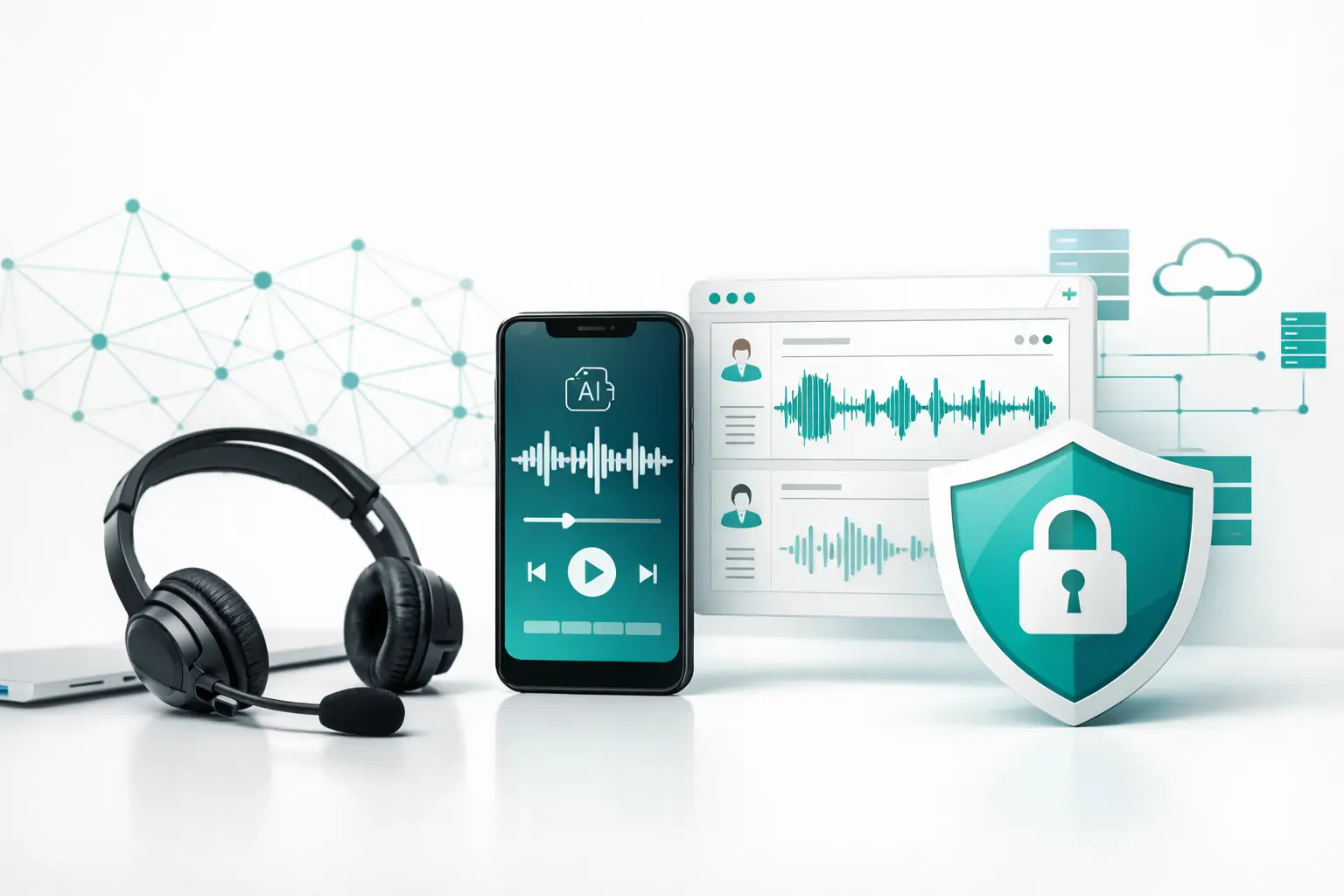
A disputed callback is where recording security stops being theoretical. Your team needs the audio to verify what happened, but the same file may contain a customer’s phone number, address, financial details, or account context. If that recording is exposed, over-retained, or sent to the wrong system, the operational cost arrives fast.
So, are AI call recordings secure? They can be. But AI does not make recordings secure by default, and a vendor’s encryption claim is not a complete answer. Security depends on the full path: where the call enters, which AI provider processes it, where audio and transcripts are stored, who can retrieve them, how long they remain available, and whether deletion actually propagates across connected systems.
For production call operations, recordings should be treated as controlled business data, not a convenient byproduct of every conversation.
Are AI Call Recordings Secure by Default?
Usually, no. A recording is only as secure as the least-controlled system in its workflow.
A typical AI voice workflow can involve a carrier, an AI voice provider, a transcription service, a contact center platform, a CRM, a quality assurance tool, and an analytics warehouse. Each connection can create another copy of the audio, transcript, call summary, or metadata. A team may secure the recording platform while leaving broad CRM permissions or unmanaged exports as the actual exposure point.
The right question is not, “Does the AI vendor encrypt recordings?” It is, “Can we account for every place call data travels and every role that can access it?”
That distinction matters when operations scale. A small team may review a few recordings manually. A solar operator running qualification and appointment workflows, or an insurance agency handling thousands of customer conversations, needs policy-driven controls that hold up across campaigns, agents, supervisors, and systems.
The Security Controls That Actually Matter
Encryption is necessary, but it is table stakes. Serious recording security combines technical controls with clear operating rules.
Encryption in transit and at rest
Audio and transcript data should be encrypted while moving between systems and while stored. That includes recordings in the primary platform, backups, and any downstream storage used for reporting or quality review.
Ask vendors how encryption keys are managed, whether environments are logically separated between customers, and whether recordings are exposed through temporary links, permanent URLs, or authenticated application access. A downloadable file with a long-lived public URL is a very different risk profile from a recording available only after an authenticated, authorized request.
Identity and access controls
Most recording incidents are access problems, not broken encryption. A former employee’s account remains active. A contractor inherits administrator permissions. A team member downloads audio for coaching and stores it on a personal device.
Use role-based access control so users receive only the permissions required for their job. A supervisor may need playback and coaching tools. A campaign manager may need aggregate outcomes but not full audio. An administrator may configure retention rules without being able to browse customer conversations.
Single sign-on and multi-factor authentication should be standard for any system that exposes recordings. Just as important, access should be reviewed regularly, especially after role changes and offboarding.
Audit trails that answer operational questions
A secure platform should record who accessed a recording, when they accessed it, and what action they took. Download, export, share, delete, and settings changes all deserve visibility.
This is not security theater. When a customer asks how their data was handled or an internal manager investigates an unusual event, an audit trail turns a vague concern into an answerable operational question.
Redaction and sensitive-data handling
Some call types carry more sensitive information than others. If teams collect payment details, identity information, or other protected data during a conversation, the safest approach is to minimize what the recording captures in the first place.
Depending on the workflow and systems involved, that can mean pausing recording during specific steps, segmenting sensitive information into a controlled form rather than spoken audio, or applying redaction to recordings and transcripts. Redaction should be tested, not assumed. Review whether it covers both the audio and the text generated by transcription.
Recordings and Transcripts Have Different Risks
Teams often focus on the audio file and overlook its transcript. That is a mistake.
A transcript is searchable, easy to export, and frequently copied into AI summaries, CRM notes, reporting dashboards, and internal messaging workflows. It can spread faster than audio because it is lightweight and useful. It can also introduce errors: a transcription model may mishear a name, amount, or policy number, then pass that error into an automated workflow.
Apply access and retention controls to transcripts, summaries, call tags, and metadata alongside audio. If a user cannot access a recording, they should not automatically have access to a verbatim transcript that contains the same underlying information.
Teams should also define when transcripts are used for automation versus review. A summary may be enough to trigger a follow-up task, while a disputed interaction may require authorized review of the original audio. Treating those as separate data products reduces unnecessary exposure.
Retention Is a Security Decision, Not a Storage Setting
Keeping every recording forever creates a growing liability with little operational benefit. Deleting everything immediately removes evidence needed for quality management, dispute resolution, training, and customer support. The correct retention period depends on the purpose of the call, contractual requirements, applicable obligations, and your organization’s documented policies.
Build retention rules by call category rather than applying one blanket setting. Sales qualification, service callbacks, internal test calls, and escalated customer interactions may justify different periods. The policy should specify what happens to the audio, transcript, summary, attachments, backups, and exports when the retention clock expires.
Deletion also needs verification. If the primary recording is removed but the transcript remains in a CRM and a copy persists in an analytics warehouse, the data was not meaningfully retired. Ask each provider how deletion requests work, whether backups follow a separate schedule, and whether they can provide confirmation that the record is no longer available in active systems.
Vendor Security Is Only Part of the Architecture
AI call stacks are often assembled quickly: telephony here, voice model there, a CRM connector, an automation tool, and a reporting layer. That can work for a pilot. It becomes difficult to govern when ownership of the data path is unclear.
Before deploying at volume, map the lifecycle of a single call. Identify the carrier, AI provider, recording location, transcription provider, workflow engine, CRM destination, reporting destination, and any human handoff system. For each step, document the data transferred, the system owner, the access model, and the deletion behavior.
This exercise exposes the operational gaps that generic vendor questionnaires miss. For example, a provider may offer strong storage controls while an integration sends full transcripts to a CRM field visible to every sales user. The provider is not necessarily insecure. The architecture is incomplete.
An orchestration layer should make these boundaries easier to manage, not create another opaque copy of the data. VoiceUni is designed to coordinate AI voice, carriers, CRM workflows, routing, and reporting without forcing teams to stitch together unmanaged point-to-point integrations. The practical requirement remains the same: know where your call data goes, enforce access by role, and keep the workflow observable.
A Practical Security Review Before Launch
A production readiness review should cover more than a vendor’s security page. Confirm that recordings are encrypted in transit and at rest, administrative access uses strong authentication, and user permissions follow job responsibilities. Verify that recordings, transcripts, summaries, and exports each have retention rules.
Then test the real workflow. Create a test call, trace it through every connected system, and confirm that only intended users can find it. Remove a test user’s permissions and verify that access is actually revoked. Trigger the deletion process and inspect downstream systems after the expected retention window.
Finally, decide who owns recording governance. It may sit with revenue operations, contact center leadership, security, or a shared group, but it cannot sit with “the vendor.” A named owner should review integrations, approve access changes, monitor audit events, and revisit policies when campaigns or call flows change.
Security Should Support Better Operations
The goal is not to make recordings hard to use. It is to make them available to the right people for the right reason, without turning every call into uncontrolled data sprawl.
Well-managed recordings improve coaching, strengthen handoffs, resolve customer issues, and give operators a clear view of what AI agents actually said. The teams that get this right build security into call design from the first workflow, before recording volume and integration complexity make cleanup expensive.
More from the VoiceUni Blog.

What Drives Solar Appointment Booking Results
A solar operator booking 150-plus appointments in a single week is not winning because it found a magic script. It is winning because its lead response, qualification, routing, follow-up, and reporting are operating as one system. Solar appointment booking results are usually decided in the handoffs between those st...

AI Phone Number Reputation Guide for Call Teams
A campaign can have clean data, a capable AI voice agent, and a well-built follow-up sequence, yet still underperform for one basic reason: the originating phone number has lost trust. This AI phone number reputation guide is for operators who need to protect answer rates before poor number health turns into a pipel...

AI Contact Center Software Review for Operators
An AI contact center software review should start where most evaluations fail: the live workflow, not the demo. A voice agent that can hold a convincing conversation is only one component. Revenue operations still need the right lead data, approved contact rules, routing logic, carrier capacity, CRM updates, human e...
Get new posts by email.
One email a month, no spam, unsubscribe anytime.