
How to Automate Inbound Routing Without Gaps
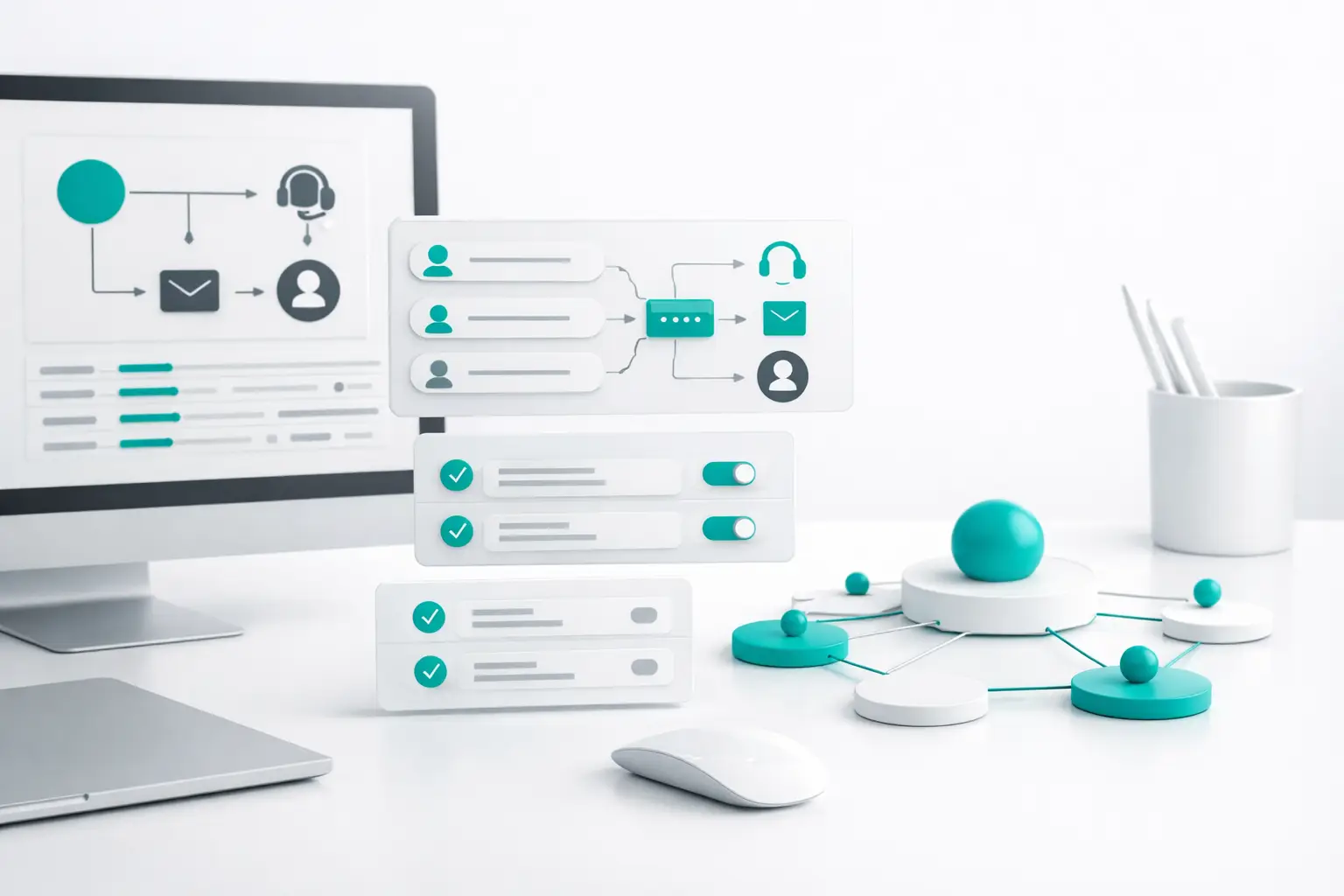
A homeowner calls after seeing a solar quote. They need a live transfer if a rep is available, a qualified callback if the team is busy, and a different path entirely if they are an existing customer asking about installation. If every inbound call lands in the same queue, the operation is already losing time and context.
Learning how to automate inbound routing is not about replacing a phone tree with an AI agent. It is about making a real-time decision on every conversation: who or what should handle it, what information they need, and what happens if the preferred route is unavailable. Done well, routing protects speed-to-lead, reduces unnecessary transfers, and gives human teams the conversations that actually require them.
Start With Routing Decisions, Not Tools
Most routing projects fail before the first integration is connected. Teams start with a vendor, build a basic menu, then try to force every exception through it. The result is a maze of queues, manual workarounds, and rules nobody trusts enough to change.
Start by documenting the decisions your operation already makes. For each inbound conversation, identify the signals that matter: the phone number dialed, campaign or ad source, caller identity, CRM status, geography, language, service line, urgency, and current agent availability. Then define the outcome for each meaningful combination.
A new mortgage lead from a paid campaign may go to an AI receptionist for qualification and calendar booking. A returning borrower with an open application may need their assigned loan officer. An insurance policyholder reporting an urgent claim may require a priority support queue. These are distinct operational workflows, not variations of one greeting.
Keep the first routing map narrow. Build for the highest-volume and highest-value call types first. A system that correctly handles 80 percent of calls with clear escalation paths is more valuable than an elaborate decision tree that no one can maintain.
How to Automate Inbound Routing With Real-Time Context
Inbound routing becomes useful when it can evaluate context before the caller has to repeat it. That means your telephony layer, AI agent, CRM, scheduling system, and reporting data cannot operate as isolated tools.
Identify the caller before asking basic questions
When a recognized number reaches your business, the system should look up relevant records immediately. It can check whether the caller is a new lead, an existing customer, a missed appointment, or a contact assigned to a specific rep. It can also retrieve the last disposition, upcoming appointment, open opportunity, and recent conversation history.
This does not mean every caller should be sent straight to a person. It means the AI agent or human answering the call starts with the correct frame. A receptionist can say they see the caller has an installation scheduled, then route to the service team. A sales agent can continue a qualification conversation instead of starting over.
For unknown callers, use the entry point as context. A dedicated tracking number for roofing estimates should not follow the same route as the number printed on a customer invoice. Source-aware routing lets teams preserve attribution while giving the conversation an appropriate first response.
Route by intent, not only by keypad selection
Traditional IVR routing relies on callers navigating menus. It works for simple, stable categories, but it adds friction when the caller has an urgent or nuanced need. An AI receptionist can classify intent from natural speech, gather only the missing information, and trigger the right workflow.
The routing criteria should be explicit. Define what counts as a sales inquiry, service request, appointment change, billing question, vendor call, or escalation. Then set confidence thresholds. If intent is clear, route automatically. If it is ambiguous, ask one clarifying question or send the caller to a trained generalist queue.
Over-automating ambiguous calls creates bad transfers. Under-automating everything creates long queues. The right balance depends on call volume, the cost of delay, and how consistent your categories are.
Match the route to capacity and skill
The best destination is not always the first available person. A high-intent solar lead in Arizona may need a licensed closer who covers that market. A Spanish-speaking service caller may need a bilingual team member. A real estate inquiry tied to an existing listing should reach the listing team before a general intake queue.
Build skills and ownership into the routing logic. Then layer availability on top. If the assigned rep is available, route directly. If not, choose a qualified backup, offer a scheduled callback, or let the AI agent complete the next useful step. Do not leave the caller hearing a generic voicemail simply because one individual is unavailable.
Design Every Route With a Failure Path
Routing is an uptime problem as much as a workflow problem. Carriers experience issues, agents miss calls, CRMs return incomplete data, and an AI provider may be temporarily unavailable. A production system needs a defined next action for each of those failures.
At minimum, every inbound path should answer four questions: What happens if the primary destination does not answer? What happens if the CRM lookup fails? What happens outside business hours? What happens if the AI agent cannot confidently complete the request?
A practical fallback chain might send a call from an assigned rep to a team queue, then to an AI receptionist that books a callback, then to a voicemail workflow that creates a task and sends an approved confirmation message. The sequence should be short, observable, and tied to ownership. A fallback that creates no record is just a dropped call with better branding.
Carrier and number resilience matter here as well. If your inbound operation depends on one carrier configuration or a single hand-built forwarding rule, a localized failure can disrupt revenue. Failover-enabled carrier management and centrally managed number logic reduce that exposure without forcing teams to redesign workflows every time infrastructure changes.
Treat Human Handoff as a Data Transfer
A human handoff should not reset the conversation. When an AI agent transfers a caller, the receiving rep needs the caller's intent, qualification answers, account context, source, and a concise call summary. The same applies when a webchat conversation becomes a phone call or an SMS exchange turns into a scheduled appointment.
This is where fragmented stacks create expensive friction. The caller may be recognized in the CRM, but the AI provider has no access to the record. The calendar may show availability, but the routing layer cannot reserve it. The call gets transferred, but the outcome never returns to the campaign dashboard.
VoiceUni is built to operate as the connective layer between those systems. Teams can keep their existing AI voice provider, carrier, phone numbers, CRM, and lead sources while applying consistent routing, handoff, and reporting logic across voice, SMS, email, webchat, WhatsApp, Telegram, and social DMs. The operational goal is simple: one conversation record, even when the channel changes.
Measure Routing Quality, Not Just Answer Rate
An answered call can still be a routing failure. If a qualified prospect reaches the wrong team, waits through two transfers, and has to repeat their situation, the answer rate hides the real cost.
Track routing performance at the workflow level. Look at time to first meaningful response, transfer rate, transfer success rate, abandonment by route, callback completion, appointment conversion, and the percentage of calls resolved by the first destination. Segment these metrics by number, campaign, location, intent, and time of day.
Also review exceptions. The calls that hit a fallback route, fail a CRM match, or require manual reassignment are where routing rules reveal their weaknesses. A weekly exception review is more useful than a quarterly redesign because it turns real operational drift into small, controlled improvements.
Roll Out in Controlled Stages
Do not switch every number and call type at once. Start with one clearly defined workflow, such as new paid leads during business hours. Validate CRM matching, intent classification, agent availability, transfer behavior, and reporting before expanding to other call types.
Use recordings, transcripts, and disposition data to refine the rules. If callers regularly ask for something your taxonomy does not recognize, add the category. If a route produces too many transfers, either improve the intake logic or give the first destination more authority to resolve the request.
The goal is not a complicated routing diagram. It is an inbound operation where every caller reaches the next best action with context intact. When that system is in place, adding a new campaign, channel, market, or AI agent becomes an operating change instead of an engineering project.
More from the VoiceUni Blog.

What Drives Solar Appointment Booking Results
A solar operator booking 150-plus appointments in a single week is not winning because it found a magic script. It is winning because its lead response, qualification, routing, follow-up, and reporting are operating as one system. Solar appointment booking results are usually decided in the handoffs between those st...

AI Phone Number Reputation Guide for Call Teams
A campaign can have clean data, a capable AI voice agent, and a well-built follow-up sequence, yet still underperform for one basic reason: the originating phone number has lost trust. This AI phone number reputation guide is for operators who need to protect answer rates before poor number health turns into a pipel...

AI Contact Center Software Review for Operators
An AI contact center software review should start where most evaluations fail: the live workflow, not the demo. A voice agent that can hold a convincing conversation is only one component. Revenue operations still need the right lead data, approved contact rules, routing logic, carrier capacity, CRM updates, human e...
Get new posts by email.
One email a month, no spam, unsubscribe anytime.