
Best CRM Synced Dialers for Revenue Teams
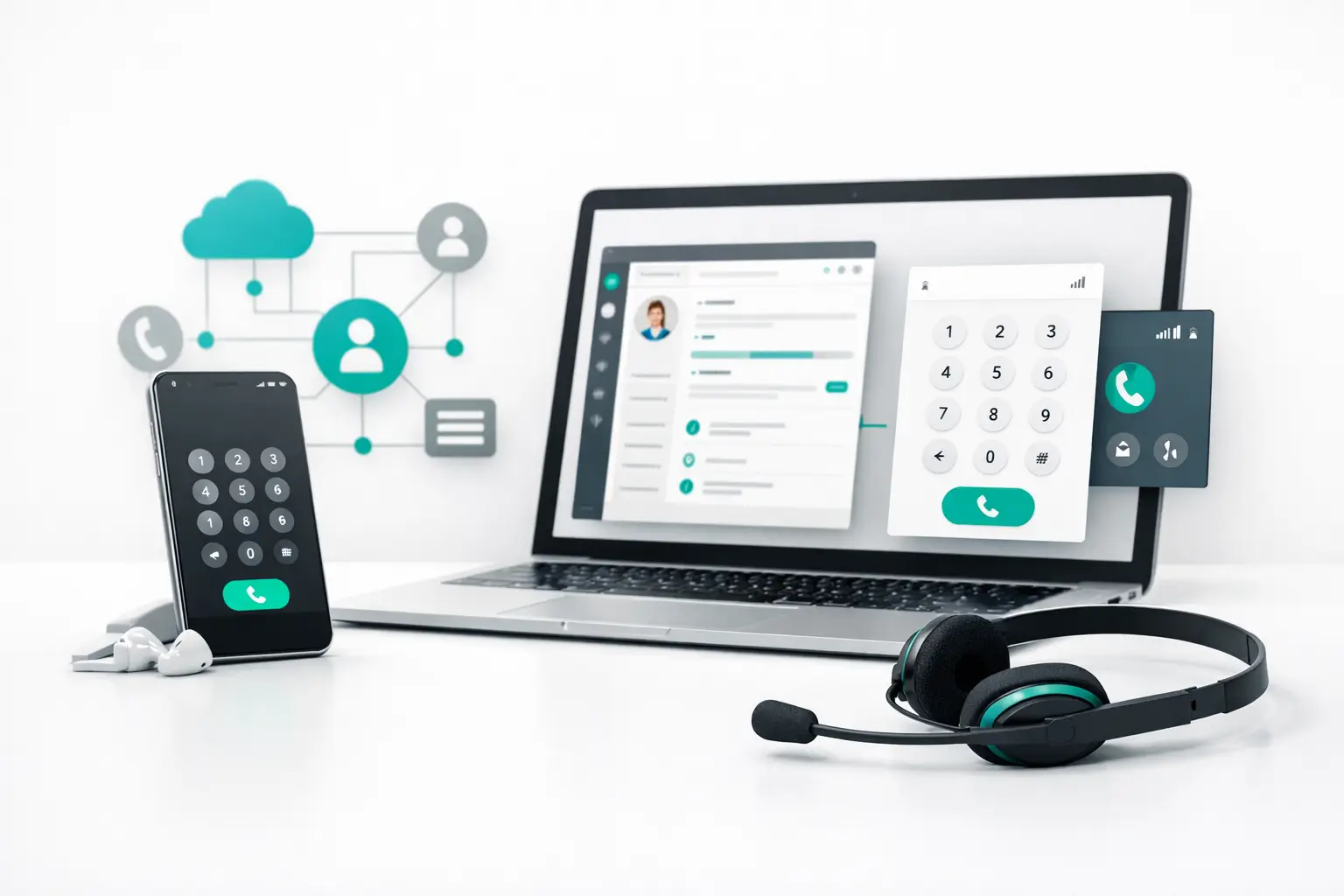
A dialer that merely logs a call after it ends is not a CRM-synced dialer in any meaningful operational sense. The best CRM synced dialers keep records, dispositions, assignments, campaigns, and next steps aligned while calls are happening - not after a manager discovers a rep worked from an outdated lead list.
That distinction matters when phone conversations drive appointments, quotes, applications, or renewals. A missed status update can trigger duplicate outreach. A disconnected booking workflow can leave a qualified prospect unassigned. And a dialer that cannot see the CRM’s ownership rules turns routing into a manual cleanup job.
For revenue teams using AI voice agents, human callers, or both, the right system is less about a long feature checklist and more about whether the dialer participates in the operating model your team already runs.
What CRM Sync Should Actually Mean
Many vendors call an integration a sync when it imports contacts and pushes completed call notes back to the CRM. That is useful, but it is only the first layer. A production calling workflow needs bidirectional, event-level coordination.
Before a call, the dialer should be able to read the right fields: lead source, lifecycle stage, owner, territory, campaign membership, appointment history, qualification data, and approved contact preferences. During the call, it should use those fields to determine who calls, what agent or workflow handles the conversation, and where a warm transfer should go. After the call, it should write a standardized outcome back to the record fast enough to prevent conflicting activity.
The strongest setups also create or update related CRM objects where appropriate. A booked appointment should not live only in a dialer dashboard. A qualified opportunity should not require a rep to re-enter the same information into a second system. The dialer needs to fit the data model, not force the operations team to invent a workaround around it.
How to Evaluate the Best CRM Synced Dialers
Start with the sync model, not the dial mode. Predictive, progressive, and power dialing all have valid uses, but none fixes a weak connection to customer data.
Check whether the sync is truly bidirectional
Ask exactly what travels in each direction and when. Can the platform read CRM changes before the next call attempt? Can it write dispositions, recordings, transcripts, custom fields, activity records, and appointment outcomes back automatically? Does it preserve lead ownership and lifecycle logic?
A one-way activity log may be enough for a small team making a limited number of calls. It will not hold up when multiple campaigns, callers, and automations touch the same contacts. Revenue operations needs a clear source of truth, not two systems that disagree by the end of the day.
Match dialing behavior to the workflow
Progressive dialing fits teams that need each call reviewed before it starts, such as consultative sales teams working high-value opportunities. Predictive dialing can increase throughput for larger, well-managed campaigns where staffing and answer-rate patterns are understood. AI dialing can handle first-contact qualification, reactivation, follow-up, and scheduling at a volume that would otherwise require additional callers.
The trade-off is control versus capacity. More aggressive pacing requires tighter routing, clearer disposition logic, and accurate availability signals. If the system does not know whether a human closer is available for a transfer, higher call volume can create more dropped handoffs instead of more revenue.
Look beyond basic contact records
A CRM record is rarely the full context for a call. Teams often pull leads from enrichment platforms, forms, ad campaigns, booking tools, and agency-managed subaccounts. The dialer should be able to accept these inputs without turning every new campaign into an engineering project.
This is where an orchestration layer earns its place. VoiceUni, for example, connects existing AI voice providers, carriers, CRMs, lead sources, and messaging channels so operators can run one campaign logic across voice, SMS, email, webchat, WhatsApp, Telegram, and social DMs. The point is not to replace every tool in the stack. It is to stop the stack from creating disconnected customer journeys.
Treat routing as a CRM problem
Routing is often framed as a telephony feature. In practice, it depends on CRM data. A mortgage inquiry may need to go to the licensed specialist assigned to that state. A home services lead may need to go to the local territory owner. An existing customer calling support should not be placed into a new-lead qualification queue.
Test whether the platform can route based on account owner, geography, service line, campaign, language, lead score, business hours, and agent availability. Then test what happens when the preferred destination does not answer. A viable workflow includes fallback rules, queues, callbacks, and a record of where the interaction went.
Demand reporting that joins call activity to outcomes
Call counts are not a performance system. Teams need to see whether conversations become booked appointments, qualified opportunities, issued policies, signed contracts, or retained accounts.
The best reporting connects campaign inputs to CRM outcomes. A solar operator should be able to compare appointment rates by lead source and call strategy. An insurance agency should be able to identify whether AI qualification is improving human agent capacity. A marketing agency managing client campaigns should be able to separate activity by subaccount, campaign, caller, and outcome without exporting spreadsheets every week.
Ask whether reporting can trace a result from source through contact attempts, conversations, transfers, and final CRM stage. If it cannot, optimization becomes guesswork.
Common Failure Points That Look Like Dialer Problems
A dialer frequently gets blamed for failures that originate in the workflow around it. Duplicate contacts, inconsistent field values, unclear dispositions, and poorly defined handoff rules will produce poor results in nearly any platform.
The most common issue is an undefined outcome taxonomy. If one caller marks a lead as “interested,” another uses “follow up,” and an AI agent uses “qualified,” the CRM cannot trigger the right next step reliably. Define a small set of operational dispositions tied to specific actions: schedule, transfer, nurture, remove from the active campaign, or route to support.
Another problem is treating recording, transcripts, and call summaries as the only useful output. They are evidence, not workflow. The system should convert approved outcomes into tasks, field updates, campaign exits, and follow-up sequences. Otherwise, managers have visibility without execution.
Number and carrier operations also matter. If answer rates fall because calling numbers are not monitored, the CRM sync will not save the campaign. Teams running meaningful outbound volume need carrier failover, number health visibility, and controlled pacing alongside the data integration.
A Practical Selection Process
Choose two real workflows before you evaluate vendors. For example: a new inbound web lead needs a call within five minutes, qualification, an appointment booking, and confirmation messages. A dormant lead needs a permitted reactivation sequence across approved channels, with CRM status updates and a human handoff when intent is detected.
Then make each vendor demonstrate those workflows against your actual CRM fields and routing rules. Avoid generic demos that start with a preloaded contact list and end with a call recording. The key questions are what updates automatically, what requires human action, what fails safely, and how the team sees the full history afterward.
Also involve the person who owns CRM hygiene and the person who owns call center operations. The buyer may be a founder or revenue leader, but implementation succeeds when data rules, routing logic, and campaign ownership are agreed before launch.
The Right Dialer Is an Operating Layer
The best CRM synced dialers do not create a separate calling universe for your team to manage. They make the CRM more actionable at the moment a conversation needs to happen, while giving callers and AI agents the context required to handle it correctly.
Choose the platform that can preserve your existing stack, enforce your workflow, and expose the path from contact attempt to business outcome. When those pieces are in place, more calling activity becomes a controlled revenue operation rather than another source of CRM cleanup.
More from the VoiceUni Blog.

What Drives Solar Appointment Booking Results
A solar operator booking 150-plus appointments in a single week is not winning because it found a magic script. It is winning because its lead response, qualification, routing, follow-up, and reporting are operating as one system. Solar appointment booking results are usually decided in the handoffs between those st...

AI Phone Number Reputation Guide for Call Teams
A campaign can have clean data, a capable AI voice agent, and a well-built follow-up sequence, yet still underperform for one basic reason: the originating phone number has lost trust. This AI phone number reputation guide is for operators who need to protect answer rates before poor number health turns into a pipel...

AI Contact Center Software Review for Operators
An AI contact center software review should start where most evaluations fail: the live workflow, not the demo. A voice agent that can hold a convincing conversation is only one component. Revenue operations still need the right lead data, approved contact rules, routing logic, carrier capacity, CRM updates, human e...
Get new posts by email.
One email a month, no spam, unsubscribe anytime.