
Can AI Agents Book Appointments at Scale?
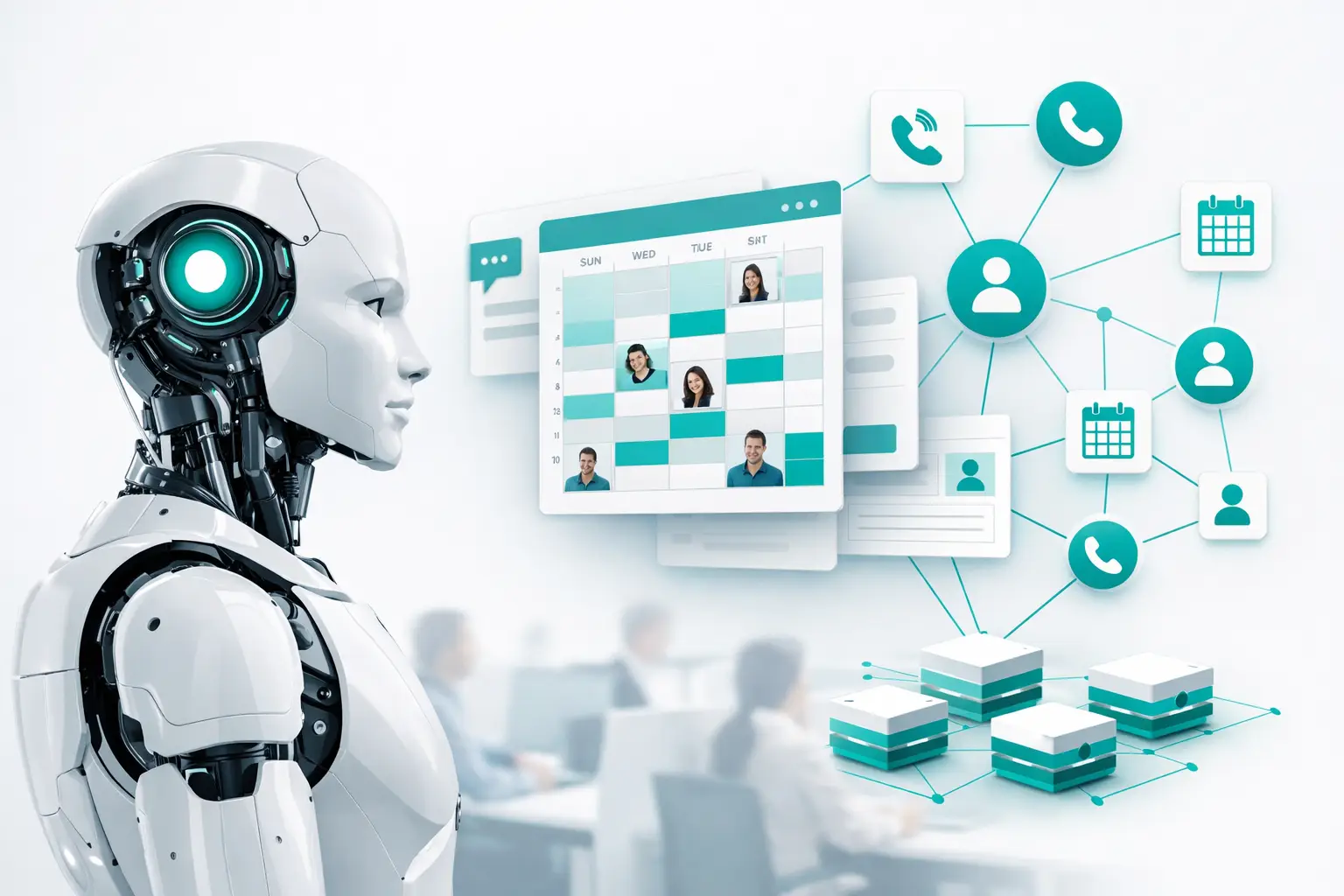
A lead responds to a campaign at 8:47 p.m., asks two qualifying questions, and wants a Tuesday afternoon slot. That interaction should not become a voicemail, a CRM task, or an open tab for a rep to handle tomorrow. Can AI agents book appointments in that moment? Yes - provided the agent is connected to the systems that make an appointment real.
The distinction matters. An AI voice agent can hold a natural scheduling conversation. But booking at production volume requires more than a capable model and a calendar API. It requires lead context, availability logic, routing rules, CRM updates, confirmation workflows, exception handling, and a clear path to a human when the conversation changes direction.
For teams in solar, home services, insurance, real estate, mortgage, and agency operations, appointment booking is not a novelty use case. It is a revenue operation. The objective is not merely to create calendar events. It is to produce qualified, confirmed appointments that show up, are attributed correctly, and reach the right salesperson or field team.
Can AI Agents Book Appointments Reliably?
They can, but reliability depends on the operating environment around the agent.
A standalone agent may be able to ask for a ZIP code, identify a service need, offer available times, and send a booking request. That is the conversational layer. In a live revenue workflow, it also needs to know whether the lead is eligible, which territory owns the appointment, which calendar has capacity, what appointment type applies, and what should happen if the prospect asks for a licensed specialist or a different channel.
Consider a home services operator with multiple service areas. A prospect may need an estimate, an emergency repair, or a follow-up inspection. Each service has different duration rules, technician availability, geographic coverage, and preparation instructions. An agent that simply finds an empty slot can create downstream failures. An agent operating against business rules can book the right appointment with the right team.
The same principle applies to sales teams. A mortgage inquiry may require different qualification fields and routing from a solar consultation. An insurance agency may need to assign appointments based on product line, state, language preference, or agent capacity. The conversation is only one part of the decision.
The Appointment Workflow Has to Be Connected
The most effective AI booking systems operate as an orchestration layer, not a collection of isolated tools. The agent needs access to the current state of the business, then it needs to write the result back to the systems the team already uses.
A production workflow typically starts when an inbound caller reaches an AI receptionist or when an approved outreach sequence receives a response from a qualified lead. The agent identifies the person, pulls available CRM context, verifies the reason for the call, and gathers only the information required to route and schedule the appointment.
From there, the platform applies booking rules. It can check calendar availability, match a lead to a rep or territory, enforce buffers between appointments, and account for appointment duration. Once the prospect selects a time, the system creates the event, logs the outcome in the CRM, updates the lead stage, and triggers confirmation messaging through the preferred approved channel.
That connected workflow eliminates a common failure point: the agent says an appointment is booked, but the calendar, CRM, and follow-up sequence disagree. Revenue teams should not have to reconcile those records manually after every campaign.
Scheduling logic is where performance is won
Calendar access alone is not scheduling logic. A serious operation needs guardrails around who can be booked, when, and with whom.
For example, a solar operator may want first consultations assigned by geography and appointment availability, while protecting prime slots for high-intent leads. A real estate team may want the next available showing only after verifying the property and buyer timeline. A marketing agency may use an AI agent to qualify a prospect against budget, service fit, and decision-maker status before offering a strategy call.
These rules should live in a workflow that operations teams can adjust without rebuilding the agent. When a market expands, a rep changes availability, or a campaign needs a new routing path, the business should be able to change the operating logic without opening an engineering ticket.
Confirmation and follow-up protect the calendar
Booking the appointment is not the finish line. The next job is reducing no-shows and preserving context for the person taking the meeting.
A useful confirmation flow states the appointment time, sets expectations, provides any required preparation, and gives the lead a clear way to reschedule. The CRM should record the source, qualification answers, call outcome, recording or transcript reference where appropriate, and the booked owner. That gives the rep context before the conversation starts and gives managers a reliable audit trail for campaign performance.
If a lead does not confirm, a multi-touch sequence can continue through the channels the business has configured and the customer has agreed to receive. The message should reflect the actual appointment and customer context, not a generic blast. That is how automation supports customer experience instead of creating noise.
Where AI Appointment Booking Needs Human Handoff
AI agents are effective at structured conversations, repeated qualification, availability checks, and immediate follow-up. They should not be forced to resolve every scenario.
A prospect may ask for technical advice, want to negotiate, raise an account-specific issue, or request a person. In those moments, the correct workflow is a warm handoff. The system should route the call to the right queue or team member, pass the captured context, and preserve the interaction history. The customer should not have to repeat why they called.
Handoffs are also necessary when data conflicts. If a CRM record is incomplete, a calendar connection is unavailable, or eligibility cannot be confirmed, the agent should avoid making promises it cannot fulfill. It can collect the request, explain the next step plainly, and assign a follow-up task or live transfer based on the business rule.
This is not a limitation of AI. It is disciplined contact center design. Human teams use escalation paths because exceptions are part of real operations. AI workflows need the same standard.
Measure Booked Revenue, Not Just Conversations
Teams often evaluate AI agents using call volume, call duration, or a vague measure of engagement. Those metrics can help diagnose performance, but they do not tell a revenue leader whether the booking operation works.
Track the funnel from lead source through contact, qualification, booked appointment, confirmation, show rate, and downstream sale. Segment results by campaign, agent version, channel, territory, appointment type, and assigned rep. If one campaign books heavily but produces poor show rates, the problem may be expectation-setting or lead quality. If booking rates drop for a specific region, availability or routing rules may be the issue.
Reporting also exposes operational bottlenecks that are easy to miss in disconnected stacks. A rep may have a full calendar while another has open capacity. A carrier issue may affect answer rates. A CRM field change may prevent a workflow from updating appointment status. Without unified visibility, teams tend to blame the agent for infrastructure problems.
VoiceUni is built for this operational reality. It lets businesses keep their AI agent, CRM, carrier, phone numbers, and lead sources while coordinating the routing, campaigns, follow-up, reporting, and human handoffs around them. The goal is not to replace every tool. It is to make the tools execute as one appointment-setting operation.
What a Practical Rollout Looks Like
Start with one appointment type and one clearly defined lead path. A missed-call recovery workflow, inbound AI receptionist, or follow-up sequence for qualified web leads is often easier to control than a broad, multi-team deployment.
Define the qualification questions, booking criteria, calendar owner, escalation rules, confirmation language, and CRM fields before the agent goes live. Then test the workflow against the edge cases your team sees every week: unavailable times, duplicate records, service-area mismatches, reschedule requests, and requests for a live person.
Once the workflow is stable, expand by campaign, territory, or appointment type. This approach gives operations leaders clean performance data and prevents a familiar outcome: a promising demo that becomes a brittle production system because no one designed the process around it.
The opportunity is straightforward. AI agents can turn time-sensitive conversations into booked appointments at a speed human teams cannot always match. The businesses that benefit most will treat booking as an integrated contact center workflow - with rules, visibility, and accountable handoffs - rather than a calendar trick.
More from the VoiceUni Blog.

What Drives Solar Appointment Booking Results
A solar operator booking 150-plus appointments in a single week is not winning because it found a magic script. It is winning because its lead response, qualification, routing, follow-up, and reporting are operating as one system. Solar appointment booking results are usually decided in the handoffs between those st...

AI Phone Number Reputation Guide for Call Teams
A campaign can have clean data, a capable AI voice agent, and a well-built follow-up sequence, yet still underperform for one basic reason: the originating phone number has lost trust. This AI phone number reputation guide is for operators who need to protect answer rates before poor number health turns into a pipel...

AI Contact Center Software Review for Operators
An AI contact center software review should start where most evaluations fail: the live workflow, not the demo. A voice agent that can hold a convincing conversation is only one component. Revenue operations still need the right lead data, approved contact rules, routing logic, carrier capacity, CRM updates, human e...
Get new posts by email.
One email a month, no spam, unsubscribe anytime.