
How to Unify Voice SMS for Faster Follow-Up
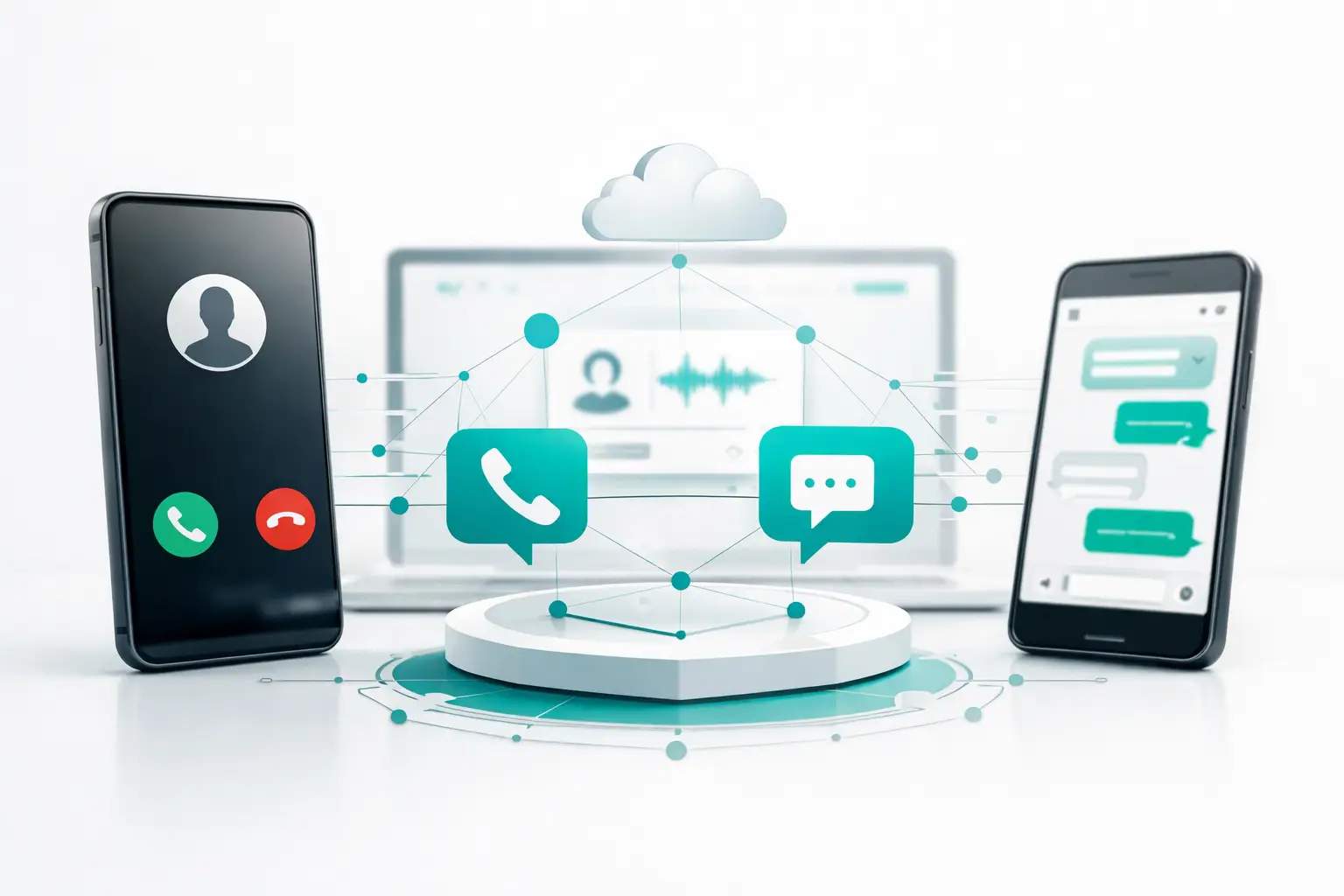
A missed call should not create a separate operational universe from a text message. Yet in many revenue teams, voice activity lives in the dialer, SMS lives in another tool, lead status lives in the CRM, and agents are left reconstructing the customer journey from tabs, exports, and memory. That is the real problem behind how to unify voice SMS: not simply putting two channels in one inbox, but making them operate as one controlled workflow.
For teams running AI voice agents, human callers, or both, unification determines whether follow-up happens at the right time, whether handoffs retain context, and whether reporting reflects what actually drove an appointment or sale. The objective is one conversation record, one routing logic, and one set of operational rules across voice and SMS.
What it means to unify voice and SMS
Voice and SMS are unified when both channels share the same contact identity, workflow state, campaign logic, routing rules, and reporting layer. A call outcome should be able to trigger a text sequence. A reply to that text should be visible to the next agent who calls. A request for help should route to the right team regardless of where the customer started.
This is different from using a phone system that happens to support texting. Channel availability is not orchestration. If a sales rep has to manually update a CRM field after every call, if an AI agent cannot see recent SMS replies, or if reporting splits call and text outcomes into separate dashboards, the operation is still fragmented.
A unified setup creates a single lifecycle for each lead or customer. For example, a homeowner submits a request for an estimate, receives an approved confirmation text, speaks with an AI qualification agent, and is transferred to a live scheduler. Every touchpoint updates the same record. The scheduler sees the request source, qualification notes, call recording metadata, previous texts, and open appointment slots without asking the customer to repeat themselves.
Start with the customer journey, not the tools
The fastest way to create another brittle integration stack is to begin by connecting every application that has an API. Start with the operational path instead: what should happen from the first lead event through booked appointment, sale, service request, or handoff?
Map the moments where voice and SMS need to interact. In a typical inbound workflow, that may include a form submission, immediate confirmation text, AI or human call attempt, voicemail handling, follow-up messages, qualification, booking, and CRM disposition. For support, the sequence may begin with an inbound call, move to a text-based update, and return to voice if the issue requires detailed troubleshooting.
Each stage needs a defined owner and outcome. If an AI voice agent qualifies a lead, determine whether it should book directly, transfer live, create a task, or move the record into a follow-up sequence. If the customer replies by SMS, decide whether that response pauses the call cadence, changes lead priority, or routes to a specific queue.
The answers depend on your sales motion. A mortgage team may prioritize immediate live transfer after a high-intent inbound call. A solar operator may use a structured qualification flow before booking a field appointment. An insurance agency may need different routing based on line of business and producer availability. The workflow should reflect those realities rather than force every lead through the same generic sequence.
Build one contact record and one event timeline
The foundation of a unified voice SMS operation is a reliable contact identity. Every call, text, campaign step, appointment status, and handoff must attach to the same person or account record.
That requires consistent phone number normalization, clear duplicate-handling rules, and a source of truth for contact fields. If one system stores a mobile number in a different format, or a lead enters through multiple sources with conflicting records, automation can send activity into the wrong thread or create parallel follow-up paths.
Your timeline should capture more than completed calls and delivered texts. It should also record meaningful operational events: call connected, voicemail reached, SMS replied, appointment booked, transfer accepted, agent unavailable, sequence paused, and CRM stage changed. These events make automation explainable. They also give managers a way to diagnose why a lead was not contacted or why a handoff failed.
Use outcomes that drive the next action
Generic dispositions such as "called" or "texted" are not enough. Voice and SMS activities need outcome labels that move the workflow forward.
A connected qualification call could set the lead to "qualified - booking pending." A text reply asking for a callback could create a prioritized call task. A confirmed appointment could stop promotional follow-up and start reminder messages. A request to speak with a person could route the conversation into a live queue with the full interaction history attached.
This is where many teams lose performance. They capture activity but do not convert it into state changes. The result is duplicate calls, messages that ignore recent conversations, and reports that show volume without showing progress.
Design routing around context and availability
Unified communications become valuable when the next person or system can act with context. An inbound caller should not have to restate what they typed in a text message. A human agent taking an AI transfer should not have to ask why the lead was called.
Routing logic should consider both customer context and operational capacity. Context includes lead source, location, service line, lifecycle stage, prior conversations, appointment status, and stated intent. Capacity includes business hours, agent skill group, queue depth, calendar availability, and carrier health.
For AI-to-human handoffs, pass a concise structured summary rather than a raw transcript alone. The receiving agent needs the reason for transfer, qualification answers, requested outcome, urgency, and any unresolved question. The transcript can remain available for verification, but the summary is what helps the agent move the conversation forward.
Fallback paths matter as much as primary routing. If an assigned agent is unavailable, route to an appropriate backup queue. If a call cannot connect, the workflow can create the next approved follow-up action and preserve its reason. If a carrier route has an issue, a failover-enabled setup protects continuity without forcing operations to manually rebuild campaigns.
Connect voice and SMS to campaigns, not isolated tasks
A campaign should coordinate channels based on customer behavior. It should not treat voice and SMS as unrelated blasts of activity.
For example, a lead who confirms interest by text may be prioritized for a call during the right operating window. A lead who completes a qualification call but does not book may receive a relevant reminder that references the next action. A customer who books should exit acquisition messaging and enter confirmation and reminder workflows.
The key is sequencing. Every channel event must be able to start, stop, pause, or modify the next step. Without that control, teams create the familiar experience of calling someone moments after they replied, sending reminders after an appointment was canceled, or continuing outreach after a lead has already been transferred to a closer.
Campaign controls should also separate prospecting, nurture, appointment reminders, reactivation, and support communications. Combining all activity into one undifferentiated sequence makes reporting weak and operational errors harder to catch.
Measure the workflow, not just channel volume
Call counts and message delivery rates are useful, but they do not tell you whether your unified operation is working. The relevant question is how voice and SMS work together to move a record toward a business outcome.
Track the path from lead creation to first meaningful response, qualification, booking, show rate, transfer completion, and revenue outcome. Compare outcomes by source, campaign, agent type, AI provider, queue, and channel sequence. If SMS-first follow-up produces more live conversations for one lead source while immediate calls perform better for another, the system should make that visible.
Operational reporting should also surface exceptions: failed handoffs, duplicate records, unanswered inbound calls, stalled sequences, number health issues, and leads with no next action. These are not minor dashboard details. They are the gaps where paid lead spend and customer trust disappear.
A platform such as VoiceUni can act as the orchestration layer between your AI provider, carrier, CRM, lead sources, and messaging tools. The point is not to replace a working AI agent or CRM. It is to give those systems shared routing, campaign control, reporting, and handoff logic without asking your engineering team to maintain a web of point-to-point connections.
How to unify voice SMS without rebuilding everything
You do not need a full rip-and-replace project to unify voice and SMS. Start with the highest-value workflow, usually inbound lead response, appointment follow-up, or AI-to-human transfer. Connect the existing CRM, phone numbers, AI voice provider, and approved messaging channel to one operational layer.
Then standardize outcomes before expanding automation. Define what counts as qualified, booked, transferred, unreachable, active, and closed. Make sure those statuses update the CRM and control campaign behavior. Once the first workflow is stable, add additional lead sources, teams, and channels.
Keep the rollout practical. Test with real call scenarios, missed-call paths, SMS replies, duplicate contacts, transfer failures, and after-hours routing. A workflow that looks correct in a diagram can still break when a lead replies mid-sequence or an agent becomes unavailable. Production readiness comes from handling those edges before volume exposes them.
The useful standard is simple: at any point, an operator should be able to open one record and understand the last interaction, the next action, the owner, and the business reason behind it. When voice and SMS meet that standard, follow-up stops depending on disconnected tools and starts operating like a revenue system.