
10 Best Call Center Integrations for AI Teams
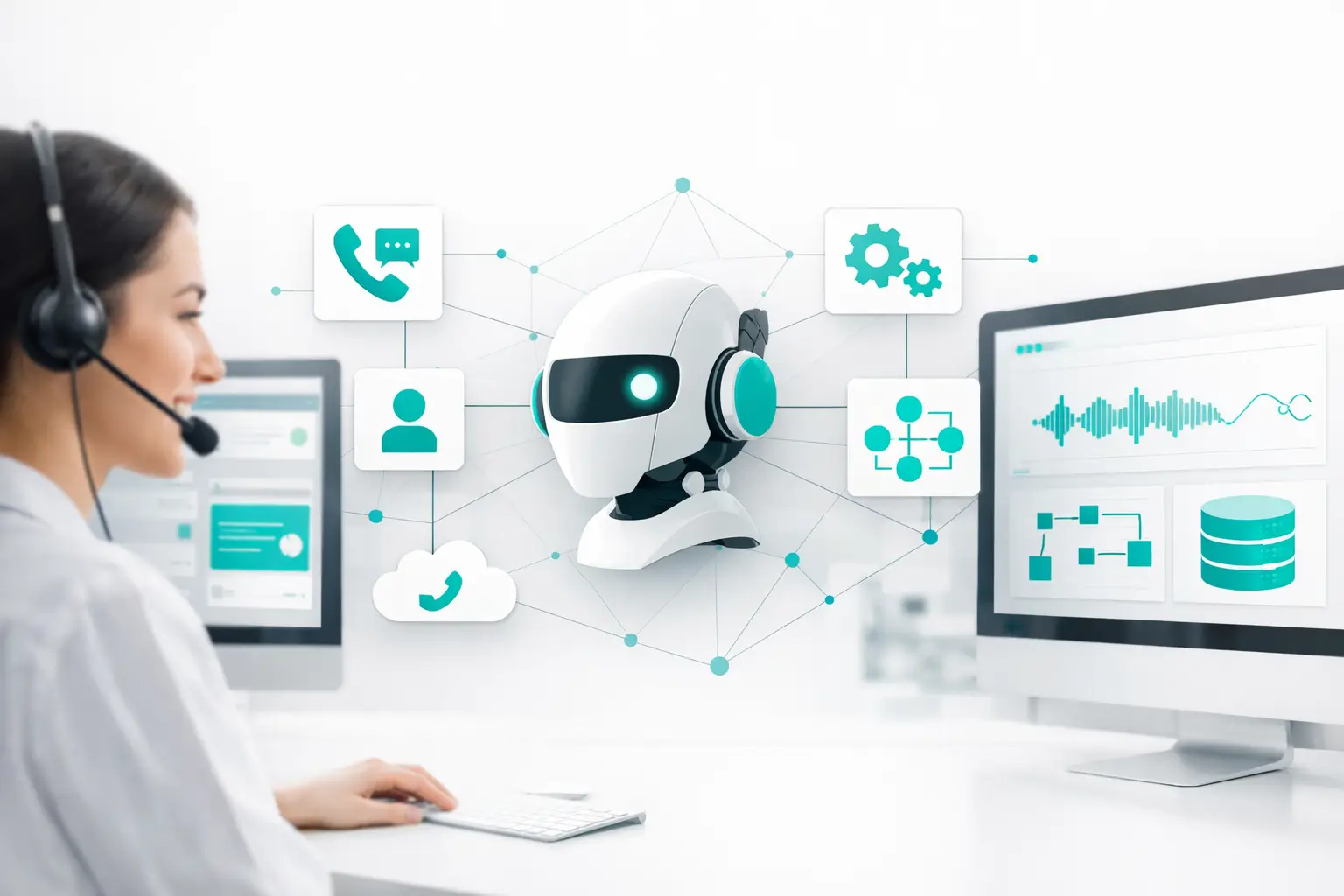
A voice agent can answer a call perfectly and still fail the operation. If the lead record is stale, the carrier route is down, the transfer queue is wrong, or the outcome never reaches the CRM, the conversation creates work instead of revenue. The best call center integrations solve that operational layer. They connect every system involved before, during, and after a customer conversation.
For teams running AI voice agents alongside sales reps, support teams, and existing telecom infrastructure, the goal is not to collect more connectors. It is to create one controlled workflow across calling, messaging, routing, customer data, and reporting. That is how an AI pilot becomes a production call operation.
What the Best Call Center Integrations Actually Do
A useful integration does more than move a contact from one application to another. It preserves context, triggers the right next action, and gives operators a reliable record of what happened. In a high-volume inbound or outbound environment, that means the system needs to handle timing, retries, ownership, routing rules, channel preferences, and exceptions.
The right stack depends on the operating model. A mortgage team may prioritize lead-speed workflows and live transfer logic. A home services operator may need appointment scheduling, territory routing, and number health controls. An insurance agency may need consistent disposition data and multi-touch follow-up across voice, SMS, and email. The integration architecture should reflect the revenue process, not just the software already in the account.
Here are the 10 integration categories that matter most for serious AI-enabled call centers.
1. CRM synchronization
A CRM integration is the system of record connection. It should pull current lead and customer data into the call workflow, then write back outcomes immediately after the interaction. That includes call status, qualification data, appointment results, disposition, notes, recordings or transcripts where appropriate, and the next owner or follow-up date.
One-way sync is not enough. If a sales rep updates a record in Salesforce, HubSpot, or another CRM, the next AI or human interaction should use that change. If an AI agent qualifies a prospect or reschedules an appointment, the CRM should reflect it without manual cleanup. Otherwise, teams end up with conflicting records and unreliable reporting.
2. AI voice provider connectivity
AI voice providers handle the conversational layer. Call center infrastructure handles the operational layer around it. The integration needs to pass the right variables into each call, receive structured outcomes back, and support escalation when the agent reaches a boundary.
For teams using platforms such as Vapi or Retell, the critical question is not whether an agent can place or receive a call. It is whether that agent can operate within campaign rules, customer context, routing policies, and human handoff workflows. An agent without access to the operating system around the conversation becomes another isolated tool.
3. Telephony carrier and number management
Carrier integration is where uptime, call quality, local presence strategy, and failure recovery become operational concerns. A carrier outage should not stop a revenue team from answering inbound calls or completing scheduled outreach. The platform should be able to apply routing logic and failover paths without requiring an engineer to intervene in the middle of the day.
Phone numbers also need management. Teams need to know which numbers are active, assigned, healthy, and producing reliable connection performance. This is particularly important when multiple campaigns, branches, markets, or client accounts share the same calling operation. Treat numbers as infrastructure assets, not disposable campaign settings.
4. Lead source integration
Most pipeline problems begin before the first call. Leads arrive from forms, paid media, partner referrals, data providers, scheduling tools, and agency-managed funnels. The integration layer needs to normalize those records, remove ambiguity around ownership, and send each lead into the correct workflow quickly.
For example, a solar lead from a landing page may require immediate qualification and a booking attempt. A reactivated lead from a CRM segment may follow a different cadence. A referral may need priority routing to a specific rep. When these rules live in spreadsheets and manual handoffs, response time degrades and attribution disappears.
5. Scheduling and calendar workflows
An appointment is only valuable if it lands on the right calendar with the correct details. Calendar integrations should account for service area, rep availability, appointment type, meeting duration, and handoff requirements. They should also update the originating CRM and trigger confirmation or reminder sequences through approved channels.
This is where AI calling programs often prove their commercial value. A voice agent can qualify a lead, offer a valid time, book the meeting, and leave the entire team with a complete record. But that outcome depends on live calendar availability and reliable write-back. A disconnected booking flow creates double bookings, missed appointments, and avoidable reschedules.
6. Omnichannel sequence orchestration
Customers do not experience your tech stack as separate channels. They experience one business. A call that goes unanswered may need an email follow-up, an approved SMS confirmation, a webchat response, or a task for a human rep. Each action should recognize what happened in the prior interaction.
The strongest integrations coordinate voice, SMS, email, webchat, WhatsApp, Telegram, and social DMs from one operational view. They prevent duplicated follow-up, preserve conversation history, and make channel changes intentional. If a customer moves from a call to text, the context should move with them.
7. Routing, queues, and human handoff
Not every conversation should remain with an AI agent. High-intent prospects, complex service issues, language requirements, sensitive requests, and escalation conditions need deliberate routes to the right human team. That handoff should include the customer record, the conversation summary, and the reason for escalation.
A basic transfer function is not enough. Operators need rules for business hours, skills, geography, campaign, account ownership, queue capacity, and fallback behavior. They also need visibility into abandoned transfers and unanswered queues. This is the difference between a demo handoff and a dependable contact center workflow.
8. Compliance and consent system connections
Calling and messaging workflows need controls that reflect the permissions, preferences, and policies attached to each contact record. Those controls should travel with the record across CRM, campaign, and channel systems rather than being rebuilt manually in every tool.
The practical value is consistency. Teams can apply approved outreach rules, manage opt-out status, retain the necessary interaction record, and avoid creating separate compliance processes for each vendor. For operators managing multiple brands or clients, centralized controls reduce the chance that a workflow change creates a blind spot.
9. Analytics, attribution, and reporting
A call log is not an operating dashboard. Revenue teams need to see lead response time, connection rate, qualification rate, appointment rate, transfer completion, campaign performance, and downstream conversion. Support teams need queue performance, containment, escalation patterns, resolution outcomes, and service-level trends.
The integration challenge is attribution. If a lead enters from an ad platform, receives an AI call, books through a calendar, and closes through a sales rep, the reporting layer should show that path. Without shared identifiers and consistent dispositions, leaders are left comparing disconnected reports that tell different stories.
10. Campaign and workflow automation
Campaign management turns integrations into repeatable operations. A campaign should define its audience, channel sequence, timing, routing, AI behavior, outcome states, owner assignments, and reporting logic. It should be possible to adjust the workflow without rebuilding the stack.
This matters most when volume increases. A team can manage a few calls with manual coordination. It cannot reliably manage thousands of lead interactions, reschedules, follow-ups, and escalations that way. Workflow automation creates consistency while still leaving room for human intervention where it has the most value.
How to Evaluate Call Center Integrations Before You Buy
Start with the failure points in your current operation. Ask where context gets lost, where leads wait, where reps duplicate work, and where leadership cannot trust the numbers. A connector that looks impressive in a marketplace may do little to fix those problems.
Then test the complete workflow, not a single API event. Run a lead from intake through qualification, booking or transfer, CRM update, follow-up, and reporting. Test what happens when a carrier route fails, a calendar has no availability, an agent requires human escalation, or the customer replies on another channel. The edge cases reveal whether the integration is production-ready.
Also evaluate ownership. If every workflow change requires custom code, the system may become expensive to maintain even if the initial setup is fast. The most effective platforms give operations teams control over campaigns and routing while preserving the flexibility to keep their existing AI provider, carrier, numbers, CRM, and data sources.
VoiceUni is built around this model: a BYO-everything infrastructure layer that coordinates AI agents, telephony, CRM data, campaigns, routing, and eight communication channels without forcing operators to replace their core stack.
Build for the Conversation, Not the Connector
The best call center integrations are not the ones with the longest directory of logos. They are the ones that keep every conversation connected to the next operational decision. When a lead is routed correctly, context follows the handoff, data returns to the system of record, and reporting shows the real outcome, AI voice becomes an accountable part of the revenue engine.
Start with one high-value workflow and make it durable. A fast response-to-booking flow, an inbound reception path, or a reactivation campaign can expose the gaps quickly. Fix those gaps at the infrastructure level, and every new agent, channel, and campaign has a stronger system to run on.
More from the VoiceUni Blog.

What Drives Solar Appointment Booking Results
A solar operator booking 150-plus appointments in a single week is not winning because it found a magic script. It is winning because its lead response, qualification, routing, follow-up, and reporting are operating as one system. Solar appointment booking results are usually decided in the handoffs between those st...

AI Phone Number Reputation Guide for Call Teams
A campaign can have clean data, a capable AI voice agent, and a well-built follow-up sequence, yet still underperform for one basic reason: the originating phone number has lost trust. This AI phone number reputation guide is for operators who need to protect answer rates before poor number health turns into a pipel...

AI Contact Center Software Review for Operators
An AI contact center software review should start where most evaluations fail: the live workflow, not the demo. A voice agent that can hold a convincing conversation is only one component. Revenue operations still need the right lead data, approved contact rules, routing logic, carrier capacity, CRM updates, human e...
Get new posts by email.
One email a month, no spam, unsubscribe anytime.